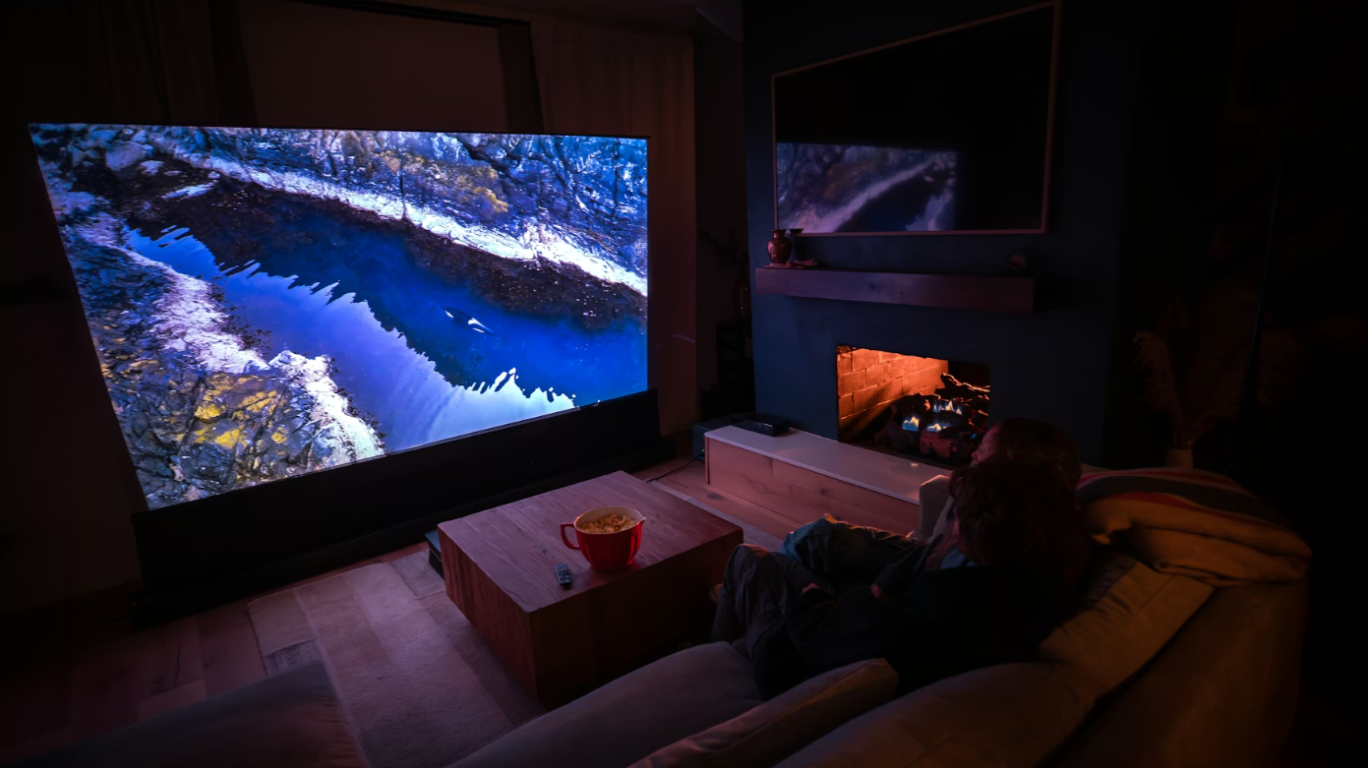
The Smart Way to Build a Home Cinema
There’s something magical about a great cinema experience, especially when the lights fade, and new worlds fill your imagination.
Recreating that feeling at home is one of the most rewarding projects a film lover can take on—but it’s also one of the most misunderstood. Many people assume an ultimate home cinema starts with a massive screen and the loudest speakers they can afford. In reality, the best home cinemas are carefully balanced systems where room, sound, visuals, comfort, and control all work together to suit your needs.
Room
Before you choose screens or speakers, you need to think about the space itself. The room you use will define the limits of what your home cinema can achieve.
Shape and size
When choosing a room for your home cinema, you should consider the shape and size of the space.
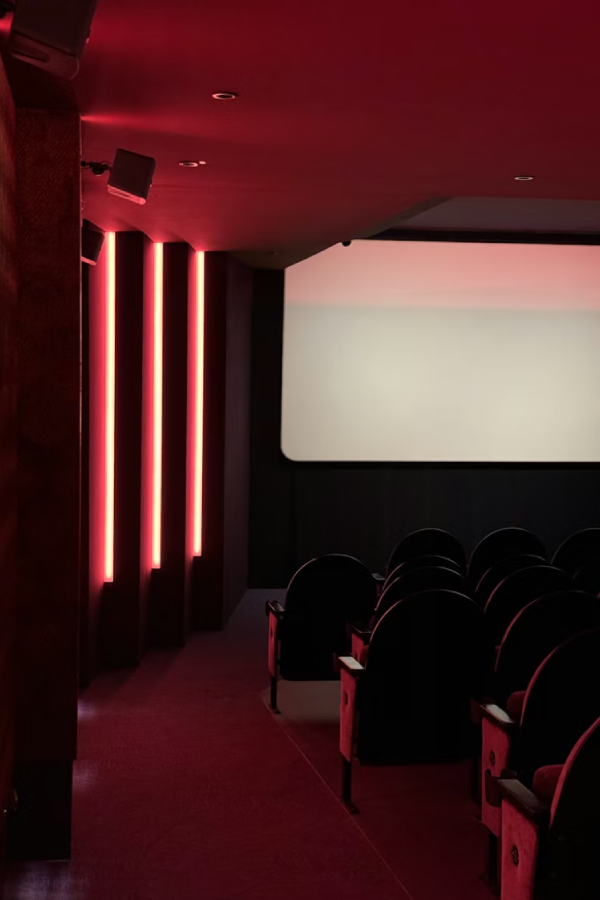
Rectangular rooms are ideal for home cinemas because they enhance sound clarity and immersion through predictable sound reflections, stemming from the speaker source directed to where you sit.
Ceiling height also plays a role, especially if you’re considering immersive audio formats like Dolby Atmos. A ceiling height of around 2.4 metres or more provides enough space for a surround sound experience.
Light
Any cinema experience relies on darkness. No matter how good your display is, if there’s a lot of light in the room, you’ll struggle to achieve a quality viewing experience.
A darker room improves contrast, which helps your eyes relax and stay focused. Beyond dimming the lights, you should try the following for the best results:
- Use blackout blinds or thick curtains to eliminate external light
- Choose dark paint or muted wallpaper
- Add a matte finish to your walls to prevent reflections
Acoustics
Regardless of your sound system, by treating your home cinema to the right acoustics, you can transform the audio experience. Good acoustics improve dialogue clarity, reduce harshness, and make surround sound seamless.
These simple choices make a huge difference:
- Use carpets or rugs to insulate the floors
- Consider soft furnishings that absorb sound naturally
- Opt for thick curtains to reduce the risk of echoes
Sound
Audio
Even the best visuals will be disappointing if they’re paired with weak sound. If there’s one area you shouldn’t underestimate, it’s audio. There are three main aspects to consider in order to balance your budget with sound optimisation.
Placement
Even the best sound system can sound muddy if placed incorrectly. Here’s how you can set up your sound system for the best results:
- Place centre speakers as close as possible to ear level
- Place surround speakers slightly above ear level
- Consider your subwoofer placement; room calibration tools can make a big difference
Surround sound
For a cinematic surround sound experience, a 5.1 system is the starting point, delivering clear dialogue and immersive sound. Moving to 7.1 adds additional rear speakers for a wider surround sound effect. The modern favourite is Dolby Atmos (5.1.2 or 7.1.4), depending on room size, which adds height speakers so sound can move above you—making rain, aircraft, and ambience feel far more realistic and immersive.
Core components
An AV receiver (AVR) is the heart of the system, powering the speakers, decoding surround formats, and optimising sound for your room. A subwoofer provides impact and depth—one works well, but two can dramatically improve bass smoothness and punch. For the most cohesive sound, it’s best to use matching speakers from the same range, ensuring effects and voices move naturally around the room.
Visuals
The choice between a projector and a large TV is one of the biggest decisions in a home cinema. There’s no right option; it’s about considering what’s best for your room, setup, and lifestyle.
Projectors
Projectors are the closest you can get to a genuine cinema experience at home. They excel at producing massive image sizes—typically 100-150 inches—which create a deeply immersive, theatrical feel.
However, projectors do demand more from your room. Good light control is essential, as ambient light can quickly wash out the image. There are also maintenance considerations, such as lamp and laser lifespan.
Even the best models typically lack the punchy brightness of an OLED TV in very bright scenes—but they still have a nostalgic and authentic charm.
Large TVs
Large TVs, such as OLED models, offer outstanding contrast, brightness, and reliability. They’re simple to set up and offer easy access to films, TV shows, and gaming alike. Their brightness performance also makes them far more forgiving in rooms with ambient light.
The main limitation is size. Even the largest consumer TVs typically top out between 83 and 98 inches, which can feel less enveloping if you sit far from the screen or crave a true cinema-scale image.
Soundproofing
Soundproofing isn’t just about being considerate—it protects immersion. When outside noise intrudes or bass leaks through walls, the cinematic illusion breaks.
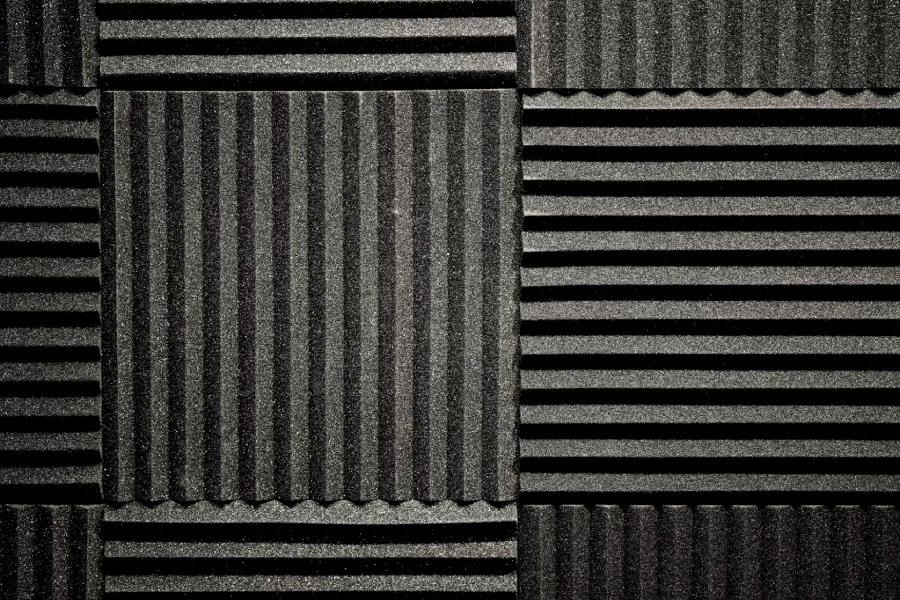
Acoustic panels are the most common stick-on option and can help control sound reflections. Soft furnishings like thick curtains, carpets, and rugs also make a noticeable difference, absorbing sound and reducing vibrations through floors, which is particularly helpful in apartments. Door gaps are another weak point, so self-adhesive door seals, draft blockers, or removable door blankets can be surprisingly effective.
These solutions won’t replace structural soundproofing, but used together, they offer a budget-friendly way to improve sound quality and better contain noise without redesign or construction.

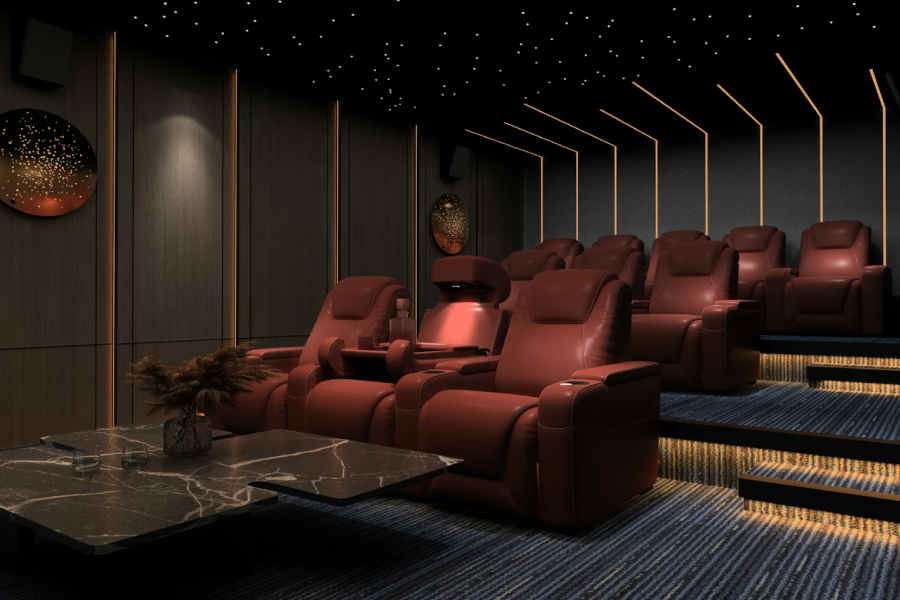
Seating and viewing distance
Comfort can be easily overlooked when building a home cinema setup, but it’s a crucial factor in cultivating an enjoyable cinematic experience.
When creating your home cinema, you should consider the following tips for comfort:
- Choose seating with good back and head support
- Consider recliners, which can improve viewing angles for long sessions
- For 4K projection, aim for a viewing distance of roughly 1–1.2x the screen width
Finale
The ultimate home cinema isn’t about specifications, brand names, or chasing trends. It’s about how the space makes you feel.
When the lights dim, the sound surrounds you, and you forget you’re at home—that’s when you’ve succeeded.