The Ultimate TV Sound System Guide: Find the Ideal Audio for Your Space
Whether you’ve got a cosy living room TV area or an entire home cinema, even the best visuals will be disappointing if they’re paired with weak sound. Audio is a crucial yet often overlooked element that can make or break your viewing experience, and as TVs become increasingly thinner, there’s less space for their built-in speakers to deliver quality sound.
Finding the right sound system for your viewing space can add a whole new layer of immersion, but there’s a lot to factor in. This guide will help you put together the perfect sound system for your needs, elevating your viewing experience to a cinematic level.
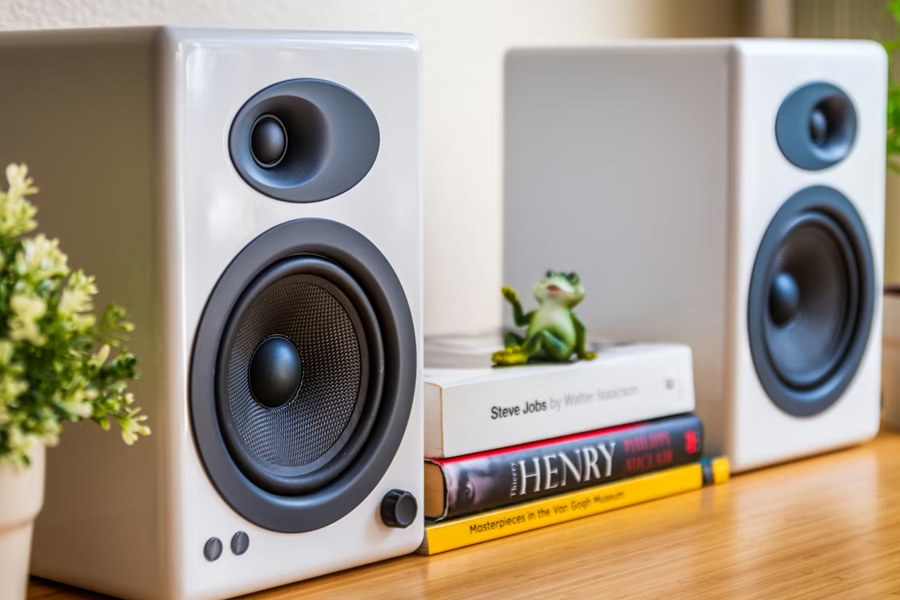
Small rooms
Spaces with a seating area less than 2.5m (8ft) from the TV.
A small room can have some advantages when it comes to sound; being closer to the audio source can reduce reverberation, making the sound much crisper. But smaller spaces also risk ‘hollow’ sounding audio space, especially if the room has a hard floor and minimal furniture.
For a small room, the ideal TV speaker is an all-in-one soundbar. This low, wide speaker is designed to sit beneath or in front of your TV and features a range of built-in speakers that produce multiple channels of sound across different frequencies. Ideally, the soundbar you buy should be the same width as or shorter than your TV for a more balanced sound and look.
While you don’t need to use a soundbar from the same manufacturer as your TV, some special features only work with matching systems. Samsung’s Q-Symphony and LG’s WOW Orchestra allow you to play sound from your connected speaker system and the TV’s built-in speakers at the same time, filling the room with immersive sound.
Medium rooms
Spaces with a seating area less than 2.5m to 4m (8ft to 13ft) from the TV.
A slightly larger room creates more opportunities for speakers. If you’re sitting at a slightly greater distance from your TV, some frequencies may become weaker on their way to you, and there is an increased risk of reverb bouncing from the walls and muddying your sound. To avoid this, you should consider a soundbar and subwoofer.
A subwoofer is a separate speaker that sits on the floor and only produces ultra-low frequencies, enhancing the sound from your soundbar and other speakers with a rich, thudding bass. This will help make up for the lower frequencies lost due to the greater distance between you and the soundbar. Many modern subwoofers can connect wirelessly, giving you the freedom to place them anywhere in the room. This is especially important because the best position for your subwoofer depends entirely on your room’s shape and acoustics.
For the best possible experience, you should buy a soundbar and subwoofer kit, as they will be tuned to work together seamlessly. If you’re expanding an existing soundbar with a subwoofer, check your soundbar’s instruction booklet first to confirm compatibility, and buy a subwoofer from the same manufacturer to ensure consistent sound quality.
To find the best position, you should perform an audio test coined the ‘subwoofer crawl’:
1) Connect your subwoofer to your soundbar and TV.
2) Sitting where you normally would, play a song with lots of bass from a music channel or app.
3) Get up and move the soundbar to different positions in your room.
4) Compare the sound from the subwoofer and make a note of positions where it sounds particularly good.
5) Rule out spots where it doesn’t sound as good or where it might be in the way.
6) When you have found the best spot, put the subwoofer there and enjoy!
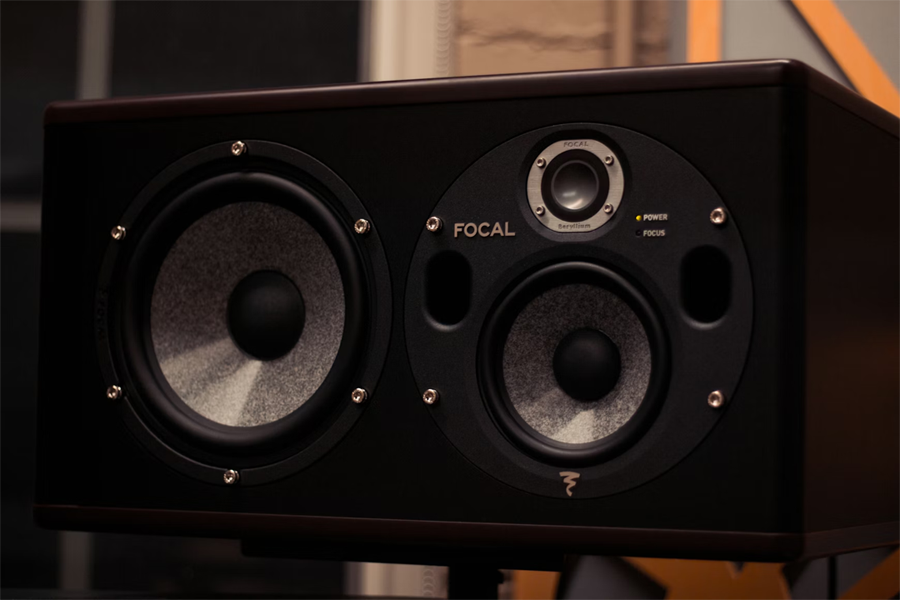
Large rooms
Spaces with a seating area 4m (13ft) or more from the TV.
Larger rooms can provide much more space to play with sound, and more reasons to do so. The increased distance and greater wall space mean more reverberation and a duller sound, making it necessary to expand your speaker system even further. For large rooms, you’ll need to opt for surround sound, with audio emitting from all around you. For this setup, we recommend adding dedicated left and right speakers to your soundbar and subwoofer, and potentially even replacing the soundbar with a dedicated centre speaker.
With separate left and right speaker channels, sounds like cars travelling across the screen can now match their movement realistically, creating a true-to-life effect that complements the visuals. But with more sound coming from more directions, positioning your speakers correctly is crucial. Try to create a ‘sweet spot’ where the sound from each speaker meets equally for the best possible listening experience. There are plenty of left and right speaker tests on YouTube if you need help finding that sweet spot.
Dedicated centre speaker
With the left and right speakers covering the dynamic channels, you could consider opting for a dedicated centre speaker instead of a soundbar. A centre speaker produces just one channel of audio, yet it still plays a critical role in your speaker system. The centre audio channel delivers about 70% of the audio, including most of the dialogue and vocals from songs. With a dedicated centre speaker, you have a focal point for your surround sound system, creating richer, cinema-style audio.
It’s worth noting that most centre speakers will not fit beneath the TV like a soundbar and will need to stand independently beneath a wall-mounted TV for the best possible acoustics.
Sound systems for other room types
Open-plan spaces
In open-plan homes, not only will the sound from your speakers be more dispersed, but your listening could be interrupted by sounds from elsewhere in the house. For a better experience, you should consider investing in a full surround sound system.
In open-plan spaces, surround sound systems help you achieve dynamic, vibrant audio while keeping each speaker at a lower volume. The sound itself is divided between the speakers, resulting in immersive, loud sound in the ‘sweet spot’ whilst reducing any unnecessary sound leaks.

Busy rooms
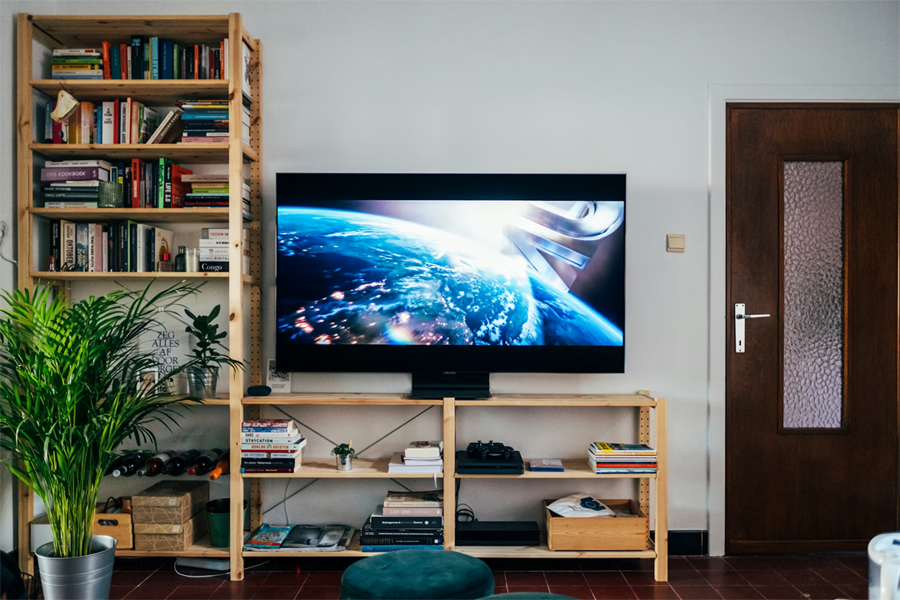
Whether you’re a maximalist with rooms full of trinkets or simply lack the space, it can feel hard to find the right sound system for your TV—but this doesn’t mean you have to go without.
Compact soundbars can fit between your TV’s legs, taking up no extra space while providing a rich, bassy sound experience. Similarly, vertical TV speakers can provide a small-scale surround sound experience. If you have no available space, consider a TV with screen speaker technology, such as the Sony Bravia range. Unlike most built-in TV speakers, these use the entire screen surface as an amplifier to produce louder, clearer audio.
Homes with children
If your viewing area frequently feels like a playroom, having lots of expensive technology connected with cables might make you pause for thought. But it is possible to have a child-friendly speaker system:
- Connect your speakers using Wi-Fi or Bluetooth technology. Without cables going across the room, there will be nothing for children to trip on or tug at. Wi-Fi and Bluetooth controls can also be protected with a password to prevent any mishaps.
- You should always follow the instructions to make sure your speakers are mounted securely and take extra steps to keep them out of reach if necessary.
- You can set a volume limit on your TV in the settings menu of most models to protect young ones’ ears.
Final thoughts
No matter the size of your space, you can create a sound system that suits you. Whether you choose an all-in-one soundbar, a full surround sound system, or something in between, your viewing experience will be transformed by a quality sound setup.
Better still, if you later want to upgrade or simply crave change, you’ll be able to keep your favourite speakers and integrate them into a larger system. This flexibility means your sound system can grow alongside your household and needs, providing peace of mind that you’ll never have to compromise on audio.