How to Choose the Best TV Sound System for Your Room
As modern TVs become thinner, there's less room inside them for powerful built-in speakers. The result is that dialogue can sound unclear, action scenes can lack impact, and movies may struggle to deliver the cinematic experience they were designed for.
Whether you're setting up a compact living room or a dedicated home cinema, choosing the right speaker system can dramatically improve how films, sports, games, and TV shows sound. This guide will help you find the best audio setup for your space.
Sound systems for small rooms
Ideal for seating positions up to 2.5m (8ft) from the TV
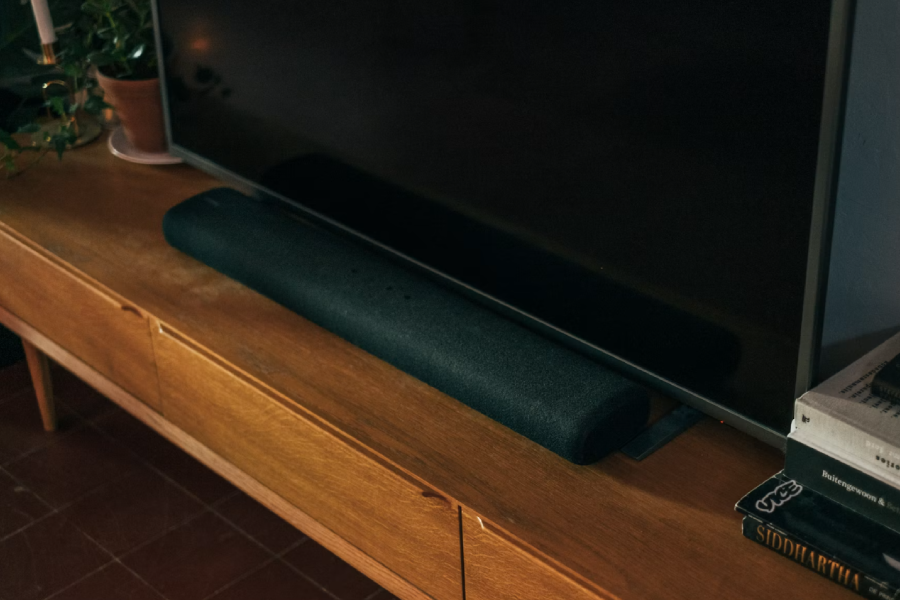
Smaller rooms can be excellent environments for TV audio. Because you're closer to the sound source, dialogue often sounds clearer, and audio reaches you before it has a chance to bounce around the room.
However, compact spaces can sometimes produce a slightly hollow or reflective sound, particularly if they have hard flooring, large windows, and minimal soft furnishings.
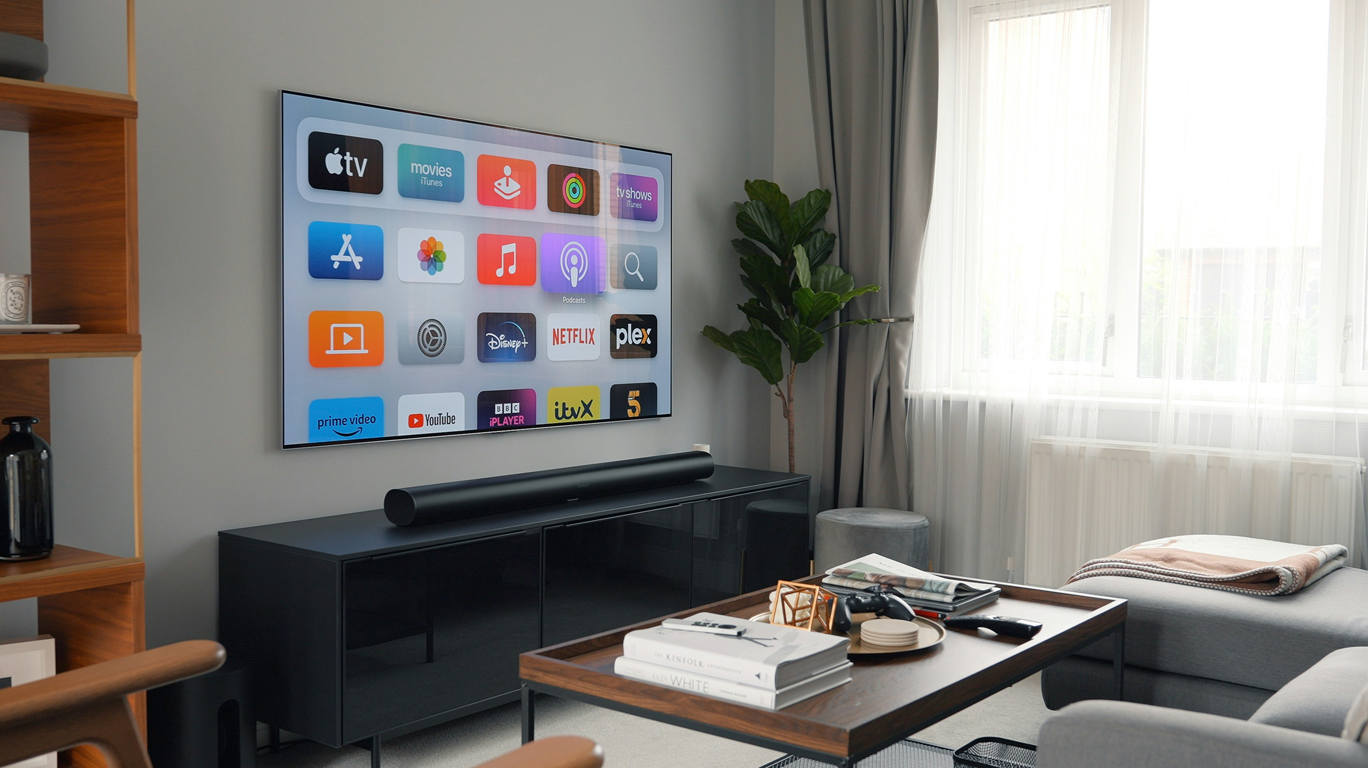
For most small rooms, an all-in-one soundbar is the ideal solution.
Soundbars are designed to sit beneath or in front of your TV and house multiple speaker drivers within a single unit. This allows them to reproduce a wider range of frequencies and create a more spacious soundstage than most built-in TV speakers.
For the most balanced performance and appearance, choose a soundbar that is the same width as, or slightly narrower than, your TV.
While soundbars work with virtually any TV, some manufacturers offer additional features when paired with compatible models. These technologies can help fill a room with sound while improving clarity and detail. When considering a soundbar, you may want to weigh up the pros and cons of opting for a speaker with the best specifications compared to a brand-matching speaker that may offer compatible-only functionalities.
Sound systems for medium rooms
Ideal for seating positions between 2.5m and 4m (8ft to 13ft) from the TV
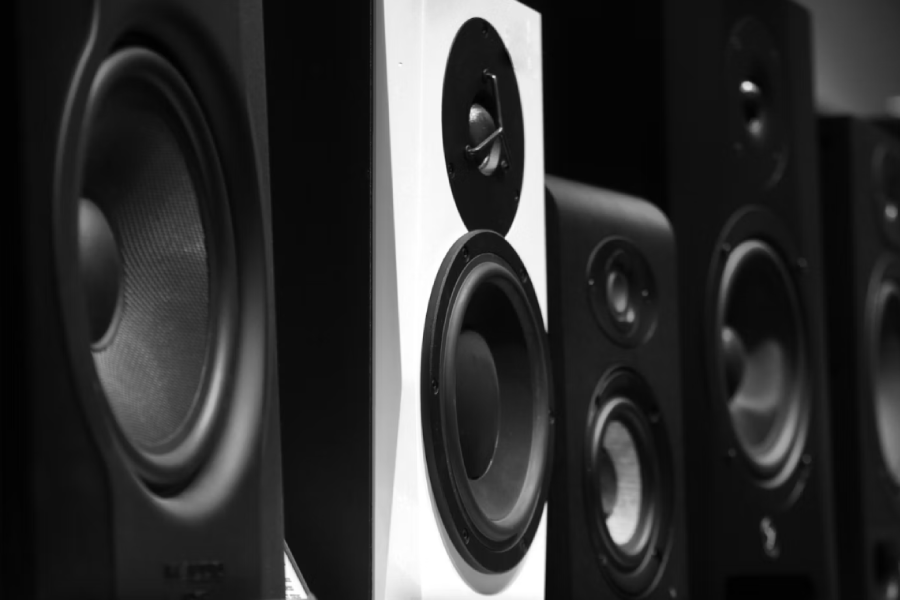
As viewing distances increase, audio has further to travel before reaching the listener. This can reduce the impact of lower frequencies and increase the amount of reflected sound bouncing from walls and ceilings.
For medium-sized rooms, a soundbar paired with a subwoofer provides the best balance between performance and simplicity.
A subwoofer is a dedicated bass speaker designed to reproduce deep, low-frequency sounds that standard speakers often struggle to deliver. Everything from explosive action scenes to rumbling engines and dramatic musical scores gains greater depth and impact when supported by a subwoofer.
Many modern models connect wirelessly, giving you greater freedom to position them where they sound best.
Why buy a matching soundbar and subwoofer?
The easiest option is to purchase a soundbar package that includes a subwoofer. These systems are specifically tuned to work together, delivering a more consistent and balanced sound.
If you're adding a subwoofer to an existing setup, check your soundbar's compatibility requirements and, where possible, choose a model from the same manufacturer.
Finding the best subwoofer position
Subwoofer placement can have a surprisingly large impact on sound quality. A simple technique known as the subwoofer crawl can help identify the ideal location.
- Connect your subwoofer and soundbar.
- Play music or movie content with plenty of bass.
- Sit in your usual viewing position and listen carefully.
- Move the subwoofer to different areas of the room.
- Compare the bass response at each location.
- Choose the position that produces the fullest, most natural sound without getting in the way.
Every room is different, so experimentation is often the key to achieving the best results.
Sound systems for large rooms
Ideal for seating positions more than 4m (13ft) from the TV
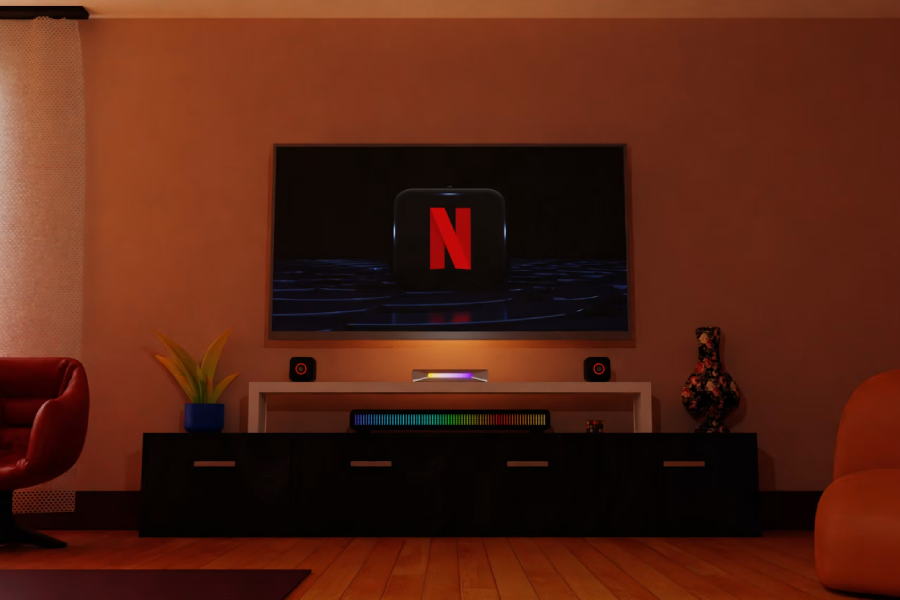
Large rooms present a greater challenge for audio. Sound has farther to travel, and larger wall surfaces create more opportunities for reflections and reverberation.
To fill a larger space effectively, you'll typically need a surround sound system.
A typical surround setup combines a soundbar or centre speaker, dedicated left and right speakers, a subwoofer, and optional rear speakers for even greater immersion.
This creates a much wider soundstage and allows audio effects to move naturally around the room. For example, a car travelling across the screen can be heard moving from one side of the room to the other, closely matching the action on-screen.
Create a listening sweet spot
For the best surround sound experience, position your speakers so that sound from each channel reaches the main seating position evenly.
This sweet spot allows dialogue, music, and effects to blend naturally while delivering maximum immersion.
Many manufacturers provide placement guides, while speaker-test videos available online can help fine-tune your setup.
Should you use a dedicated centre speaker?
For larger and more advanced installations, a dedicated centre speaker can be a worthwhile upgrade.
The centre channel is responsible for delivering the majority of dialogue and on-screen vocals, making it one of the most important components in a surround sound system.
A dedicated centre speaker can provide improved dialogue clarity, more accurate positioning of voices on-screen, greater overall balance between channels, and a more authentic cinema-style experience.
Unlike soundbars, most centre speakers require their own shelf or stand and are typically positioned beneath a wall-mounted TV.
Sound solutions for different room types
Open-plan living spaces
Open-plan layouts can make it harder to maintain powerful, focused audio. Sound disperses more easily and can compete with noise from neighbouring areas of the home.
In these environments, a surround sound system can be particularly effective.
By distributing sound across multiple speakers, surround systems create a more immersive listening area without requiring every speaker to operate at high volume. The result is richer audio where you're sitting and less disruption elsewhere in the home.
Rooms with limited space
Not every living room has space for multiple speakers and accessories.
If shelves, cabinets, or decorative items limit your options, a compact soundbar is often the simplest upgrade. Many models are designed to fit neatly between a TV's feet while delivering a substantial improvement over built-in speakers.
Another option is a TV featuring advanced screen-speaker technology, such as selected Sony BRAVIA models. These TVs use actuators behind the screen to turn part of the display into a speaker, helping deliver clearer and more direct audio than traditional TV speaker designs.
Family homes
If children regularly use the room, practicality and safety become important considerations.
A family-friendly sound setup should prioritise:
- Wireless connections, where possible, to reduce cable clutter and trip hazards
- Secure mounting for wall-mounted speakers and soundbars
- Child-safe positioning to prevent accidental damage
- Volume limits, which are available on many TVs and streaming devices, help protect younger listeners' hearing
With the right setup, it's possible to enjoy excellent sound without compromising on safety.
Final thoughts
The best TV sound system isn't necessarily the most expensive one. It's the system that suits your room size, viewing habits, and available space.
For smaller rooms, a soundbar can provide a dramatic improvement over built-in TV speakers. Medium-sized spaces often benefit from the added depth of a subwoofer, while larger rooms can take full advantage of the immersion offered by surround sound.
The good news is that many modern audio systems are designed to expand over time. You can start with a simple soundbar today and gradually add extra speakers as your needs evolve, allowing your home entertainment setup to grow alongside your space and lifestyle.