Meet the Apple Watch Series 12 and Apple Watch Ultra 4
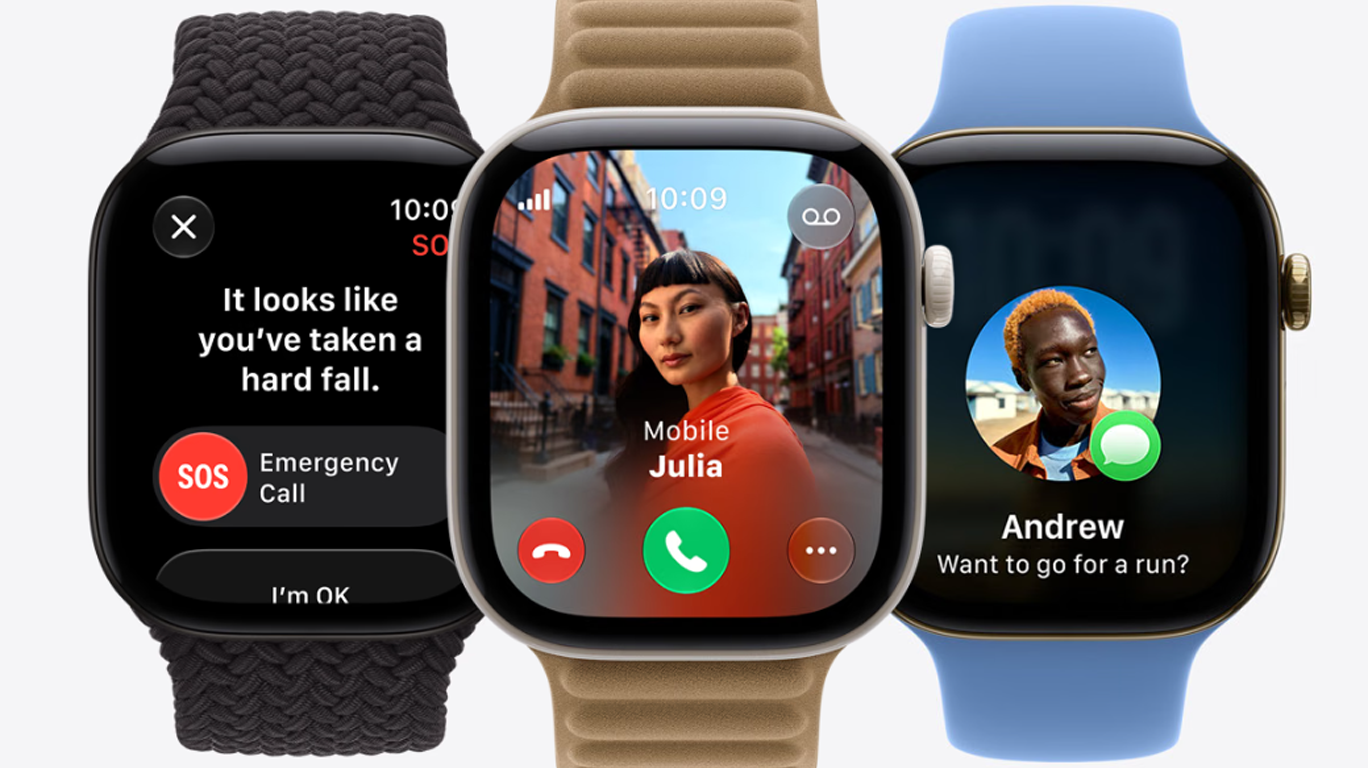
Apple has introduced the Apple Watch Series 12 and Apple Watch Ultra 4. From richer health insights to daily assistance, both watches take a proactive approach to understanding user needs.
Discover how the adaptable Series 12 compares with the bold Ultra 4, as well as the features they both share.
 Apple Watch Series 12
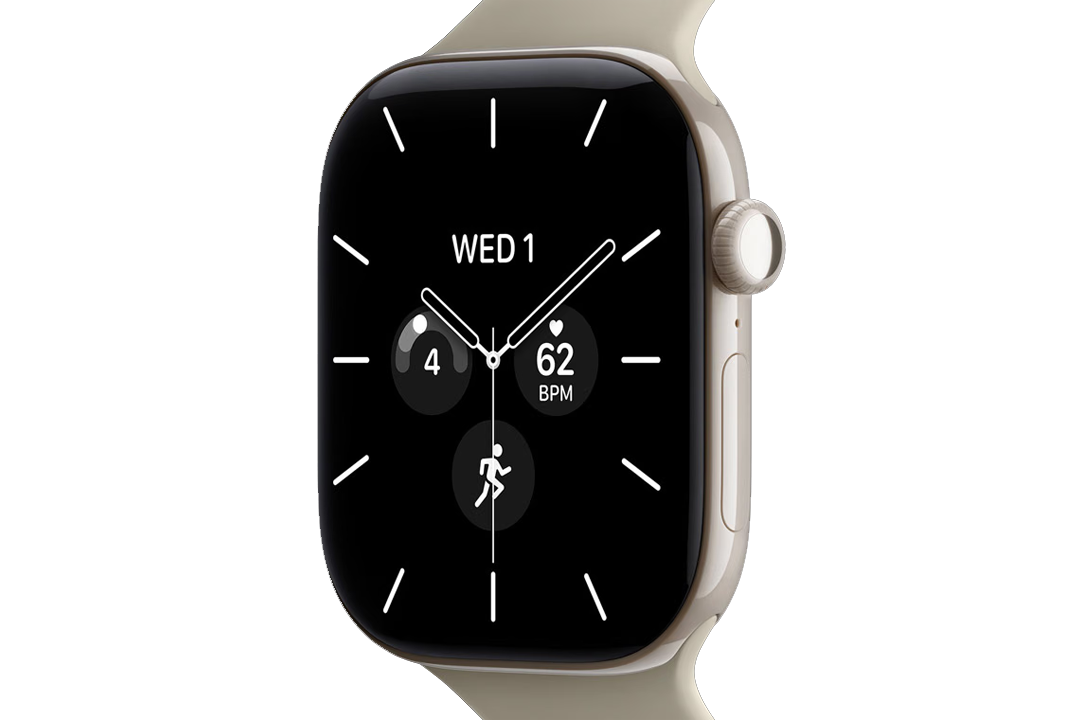
The Apple Watch Series 12 is a versatile companion for everyday life. It offers a seamless balance of health and fitness support, intelligent capabilities, and style.
It's available in GPS or GPS + Cellular models. With the GPS model, the watch must be connected to the user's iPhone via WiFi or Bluetooth to send or receive text messages and make or receive phone calls. The GPS + Cellular model uses mobile data connectivity to enable text messaging, phone calls, and Apple Music or Apple Podcasts streaming without needing an iPhone nearby. It's worth noting that a compatible phone plan will be needed for the GPS + Cellular model, so potential users should check if their existing plan covers sending calls and texts directly from their watch.
Image courtesy of apple.com
 Apple Watch Ultra 4
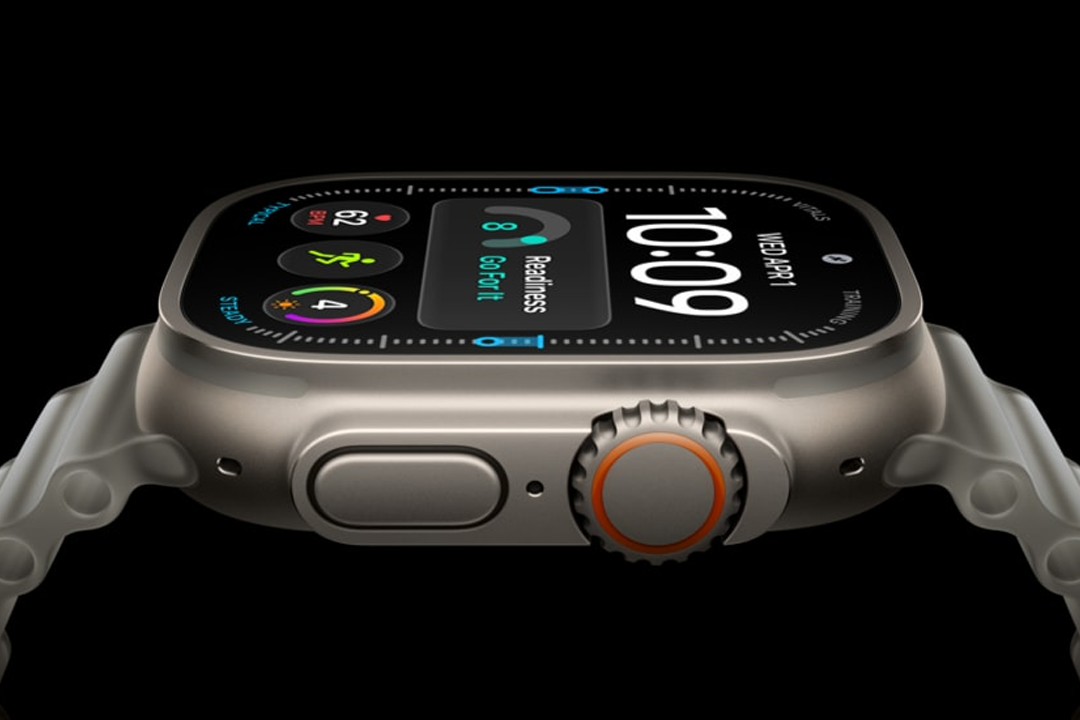
The Apple Watch Ultra 4 is a powerful device that supports users through a wide range of intensive fitness and lifestyle adventures. Designed to support everything from long-distance running and hiking to swimming and recreational diving, it combines durability and endurance with the health, connectivity, and everyday convenience of an Apple Watch.
Image courtesy of
apple.com
Design
Form factor
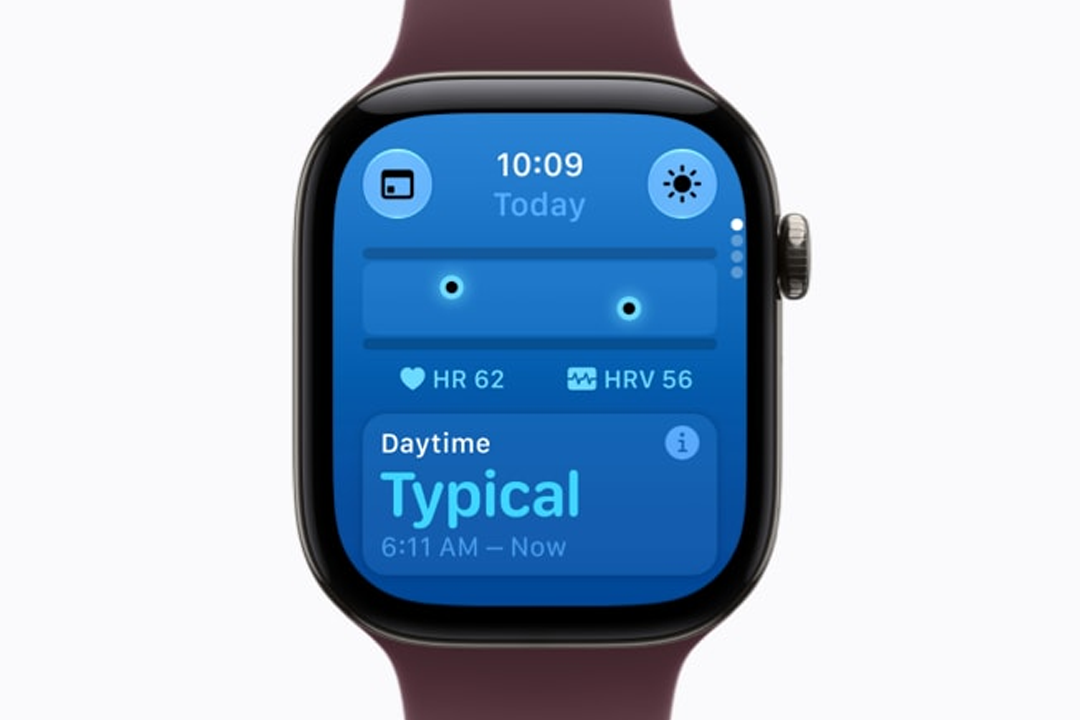 Apple Watch Series 12
The Series 12 stays faithful to the distinctive design established by its predecessors, with a rounded rectangular case featuring the signature Digital Crown and side button. The cases are available in Aluminium, Titanium, or Ceramic.
The Digital Crown can be pressed or turned to access features and apps, Siri, or the Smart Stack. Meanwhile, the side button can be pressed to access the Control Centre, Emergency SOS, Apple Pay, or to turn the device on or off.
It's available in 42mm and 46mm sizes, giving users the option to choose between a sleeker design or a slightly bigger display.
Image courtesy of
apple.com
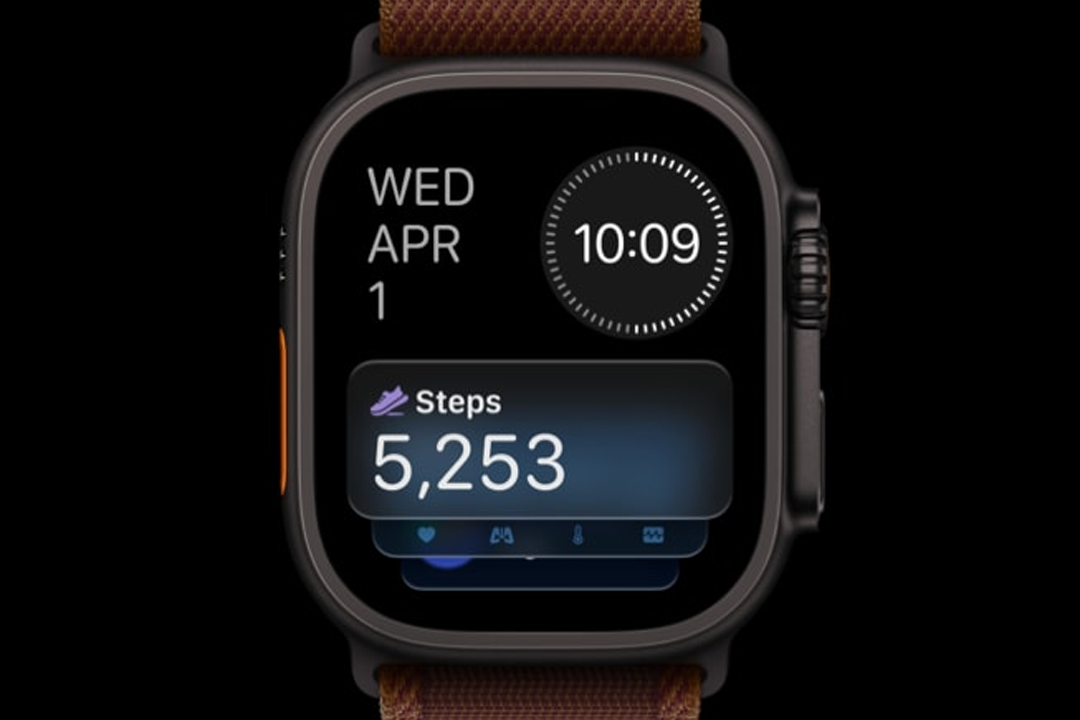 Apple Watch Ultra 4
The Ultra 4 only has one case material: Grade 5 Titanium. It has a much larger, rounded rectangular form factor at 49mm. Its side button and Digital Crown are bigger than the Series 12's, and the Digital Crown is deeply ribbed for effortless turning even when users are wearing gloves.
The Ultra 4 also features a customisable Action button, which is exclusive to the Apple Watch Ultra series. The Action button offers convenient access to a range of functions, including starting a workout or stopwatch, translating, or marking a Compass Waypoint. Users can customise the Action button to their own needs by choosing a default function. The Quick Switch feature also enables users to effortlessly switch between functions by holding down the Action button.
Image courtesy of apple.com
Display
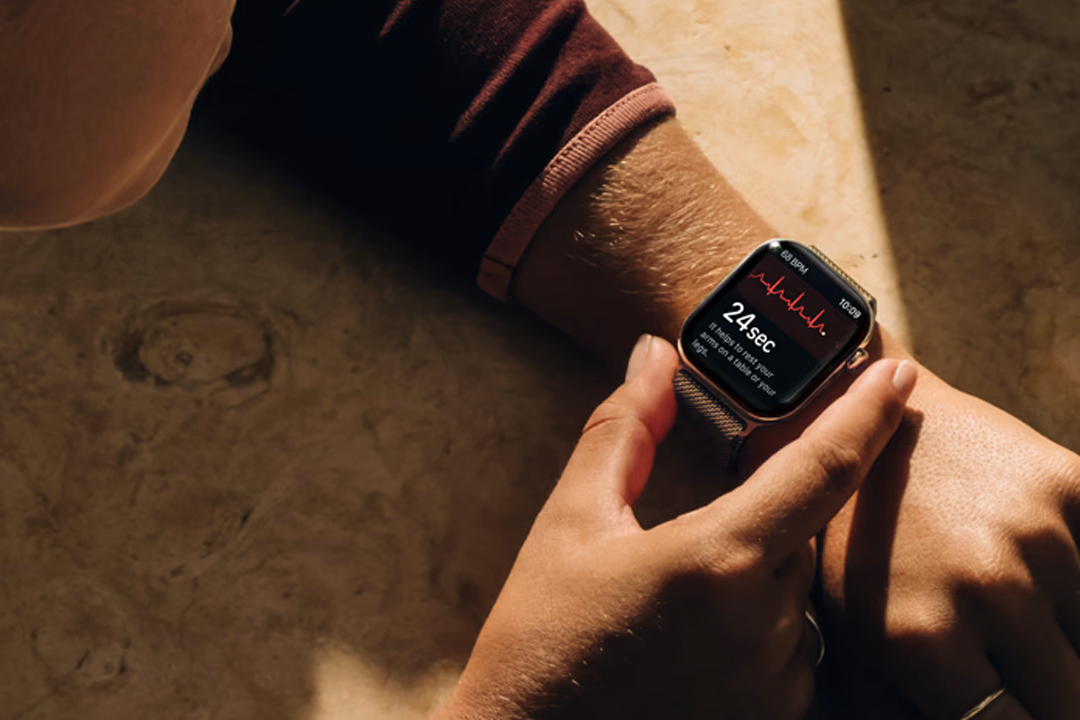 Apple Watch Series 12
The Series 12 has a stylish edge-to-edge display, which offers a larger viewing area whilst maintaining a sleek build. It has a peak brightness of 2000 nits, making the screen easily readable even in direct sunlight.
It features an Always On Retina display with wide-angle OLED and a 1Hz refresh rate. The Always On feature ensures that the time and watch face are always visible. It also shows Live Activities, notifications, or active apps. Always On is enabled by default, but can be turned off in settings.
The Series 12 benefits from the LTPO3 (Low-Temperature Polycrystalline Oxide 3) display, which adjusts the refresh rate based on on-screen content, reducing unnecessary power consumption whilst maintaining convenience when the Always On function is used.
Image courtesy of apple.com
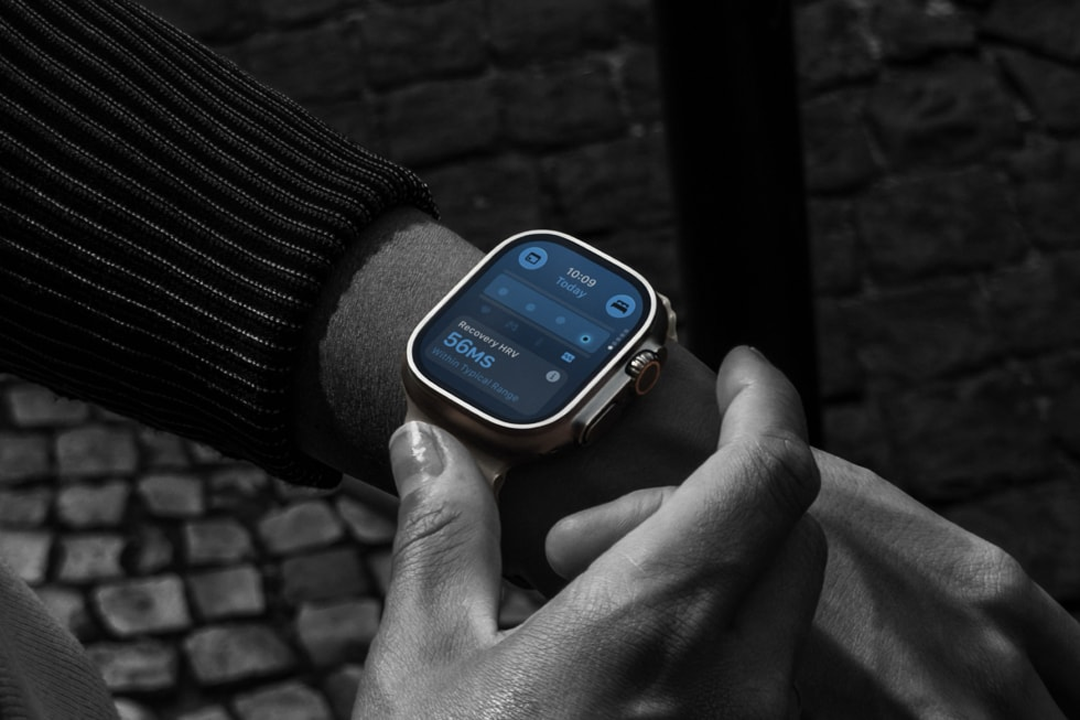 Apple Watch Ultra 4
The Ultra 4 shares the same Always On display with wide-angle OLED, a 1Hz refresh rate, and LTPO3 as the Series 12. However, instead of an edge-to-edge display, it features a flat screen with a raised lip around the edges for enhanced protection against impacts or collisions.
The Ultra 4 display has a peak brightness of 3000 nits, making it a more practical option for intensive activities or extreme environments. For adventures in the dark, Night Mode is available on certain Ultra 4 faces, offering a red display that is easier on the eyes in dark environments. Discover all the compatible faces here.
Image courtesy of apple.com
Durability
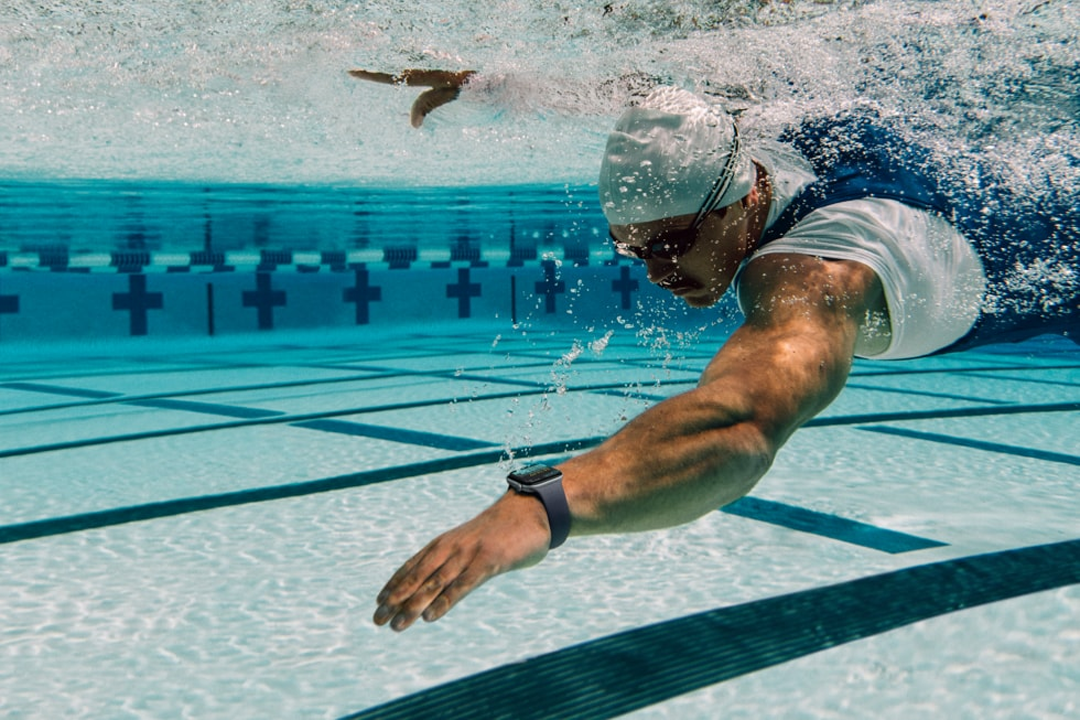 Apple Watch Series 12
The Series 12 has IP6X dust resistance; this certification means it is completely dust-tight. In practice, IP6X signifies that no dust or solid particles will be able to enter the watch.
The watch also has water resistance for up to 50 metres under the ISO standard 22810:2010, meaning it is suitable for swimming.
It's worth noting that water resistance is built directly into Apple Watches and does not need to be enabled or disabled. However, for added convenience, the Water Lock feature can be used to prevent water from registering as taps to the display. Water Lock also has an eject water function to remove any remaining water from the speaker.
Image courtesy of apple.com
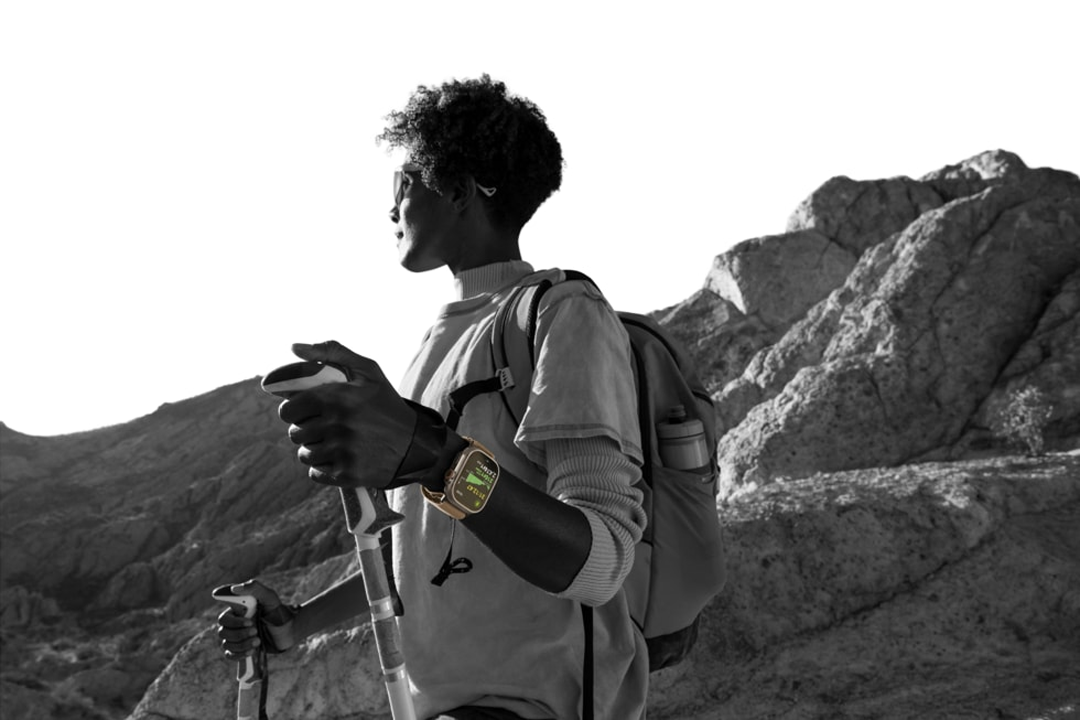 Apple Watch Ultra 4
The Ultra 4 shares the Series 12's IP6X dust resistance, but also features enhanced durability capabilities designed for more demanding environments.
The watch offers water resistance for up to 100 metres and is suitable for swimming, snorkelling and other water sports. It is also certified for recreational scuba diving to depths of 40 metres.
The Ultra 4 has been tested to the MIL-STD 810H for conditions including extreme temperatures, altitude, shock, and vibration.
Image courtesy of apple.com
Battery
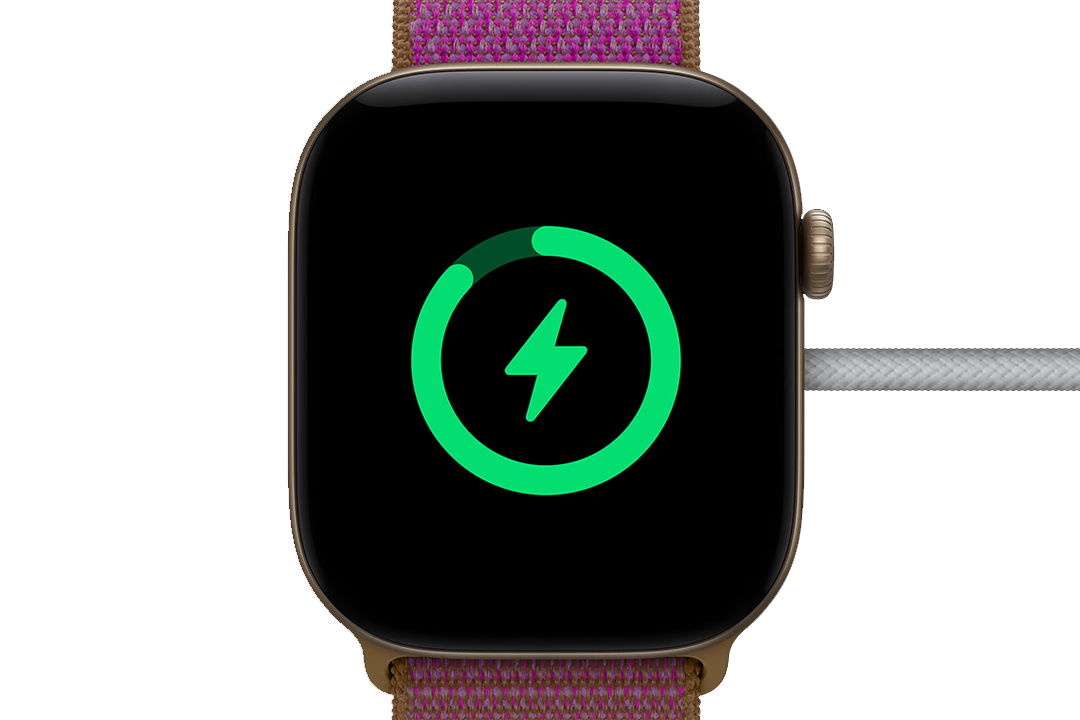 Apple Watch Series 12
The Series 12 offers up to 24 hours of battery life, extending to 38 hours in Low Power Mode.
When fast charging, the Series 12 can reach 80% charge in around 30 minutes.
Alternatively, a 5-minute charge can provide the watch with enough power for up to 10 hours of sleep tracking.
Image courtesy of apple.com
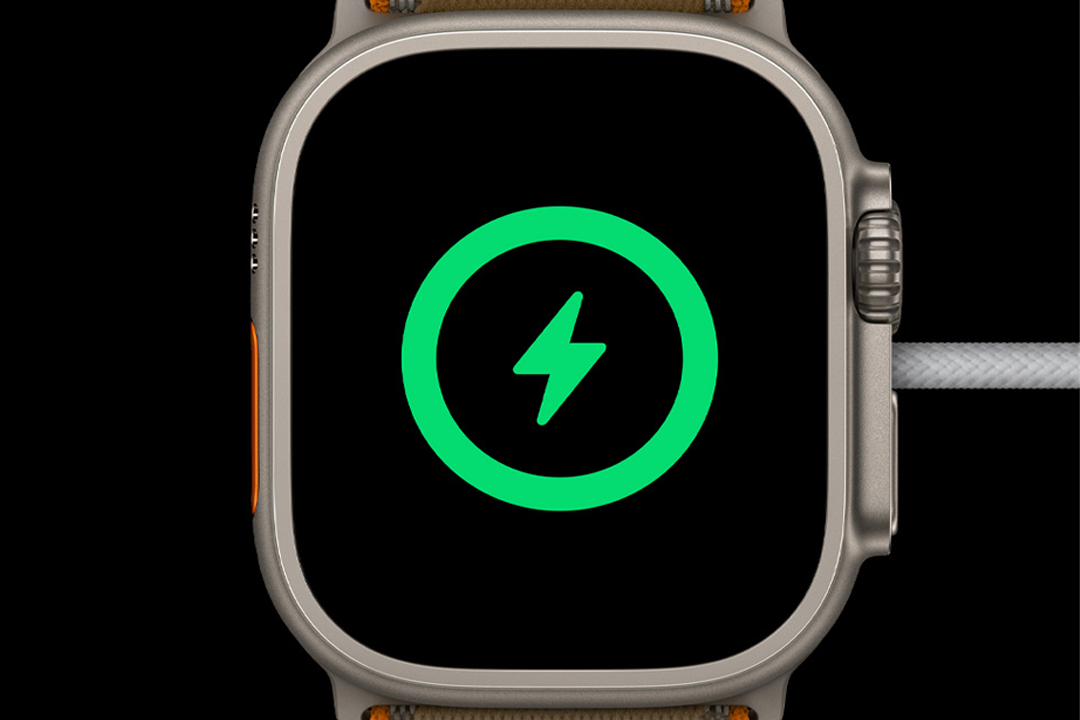 Apple Watch Ultra 4
The Ultra 4 is specially designed for longer training sessions and outdoor adventures. It can last up to 50 hours during normal use, or 84 hours in Low Power Mode.
When fast charging, the Ultra 4 reaches 80% in around 45 minutes.
Like the Series 12, a 5-minute charge can also give the Ultra 4 enough power for up to 10 hours of sleep tracking.
Image courtesy of apple.com
Hardware
S11 chip
Behind the intelligent capabilities of the Series 12 and Ultra 4 is the S11 chip. The S11 chip has a 64-bit dual-core processor, a 4-core Neural Engine, and 64GB of storage, making it Apple’s most powerful wearable chip at the time of its release.
The S11 chip features a Secure Exclave: a hardware-isolated compartment built into the silicon that processes sensor and audio data separately from the rest of the system. The chip also features a Secure Enclave: a hardware-based subsystem that isolates sensitive operations from the main operating system.
The S11 chip's privacy features mean that Audio Intelligence audio is processed in a protected environment that no one, not even Apple, can access.
Image courtesy of apple.com
Features
Health Sensing System
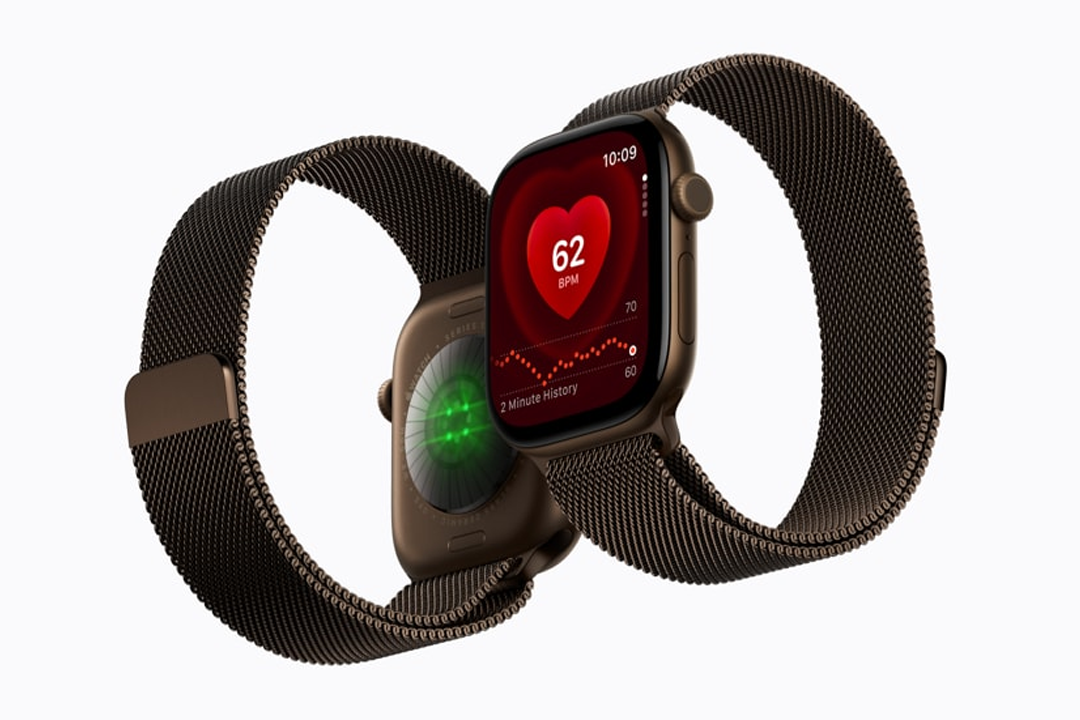
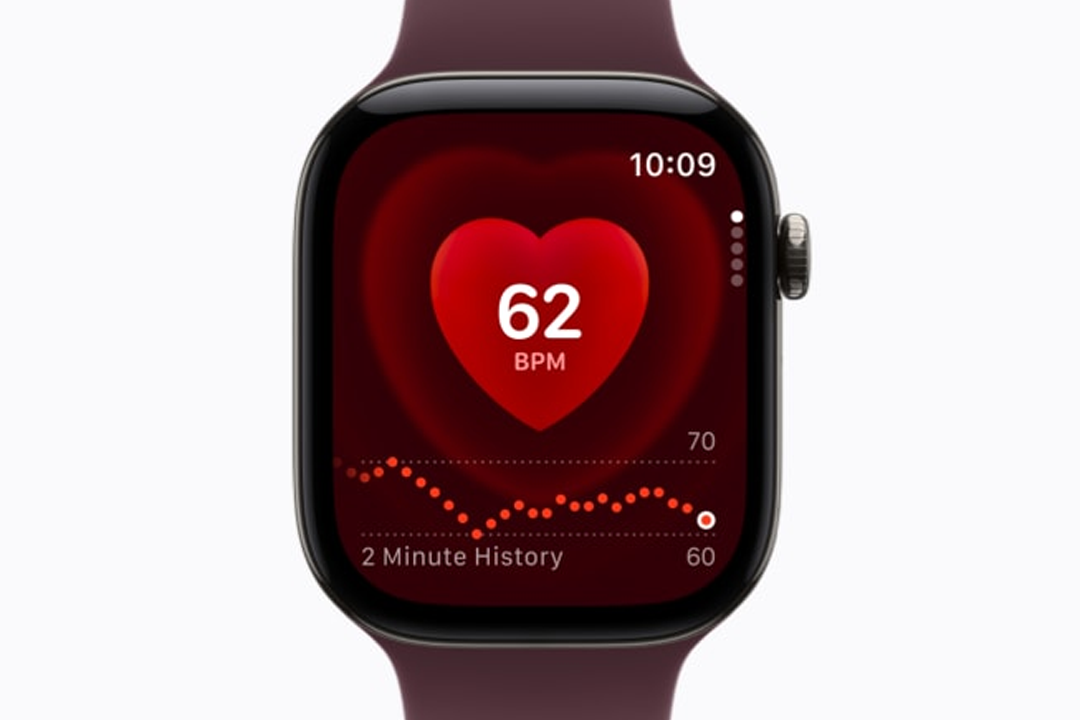
The exclusive Health Sensing System was introduced for the first time on the Series 12 and Ultra 4. It includes a third-generation electrical heart sensor, an always-on optical heart sensor, a blood oxygen sensor and a temperature sensor.
The Health Sensing System takes passive background heart rate readings every five seconds, all day long. This provides a rich stream of data for evaluating activity, recovery and physiological changes. The additional readings can also improve the accuracy of the Exercise and Move rings by giving the Apple Watch a clearer picture of how the body responds throughout the day.
Heart rate variability (HRV) receives a similar upgrade, with readings taken as often as every five minutes. Apple separates these into recovery HRV, which can help identify shorter-term signs of stress and recovery, and overall HRV, which offers a broader view of health over time.
Image courtesy of apple.com
Improved Health app
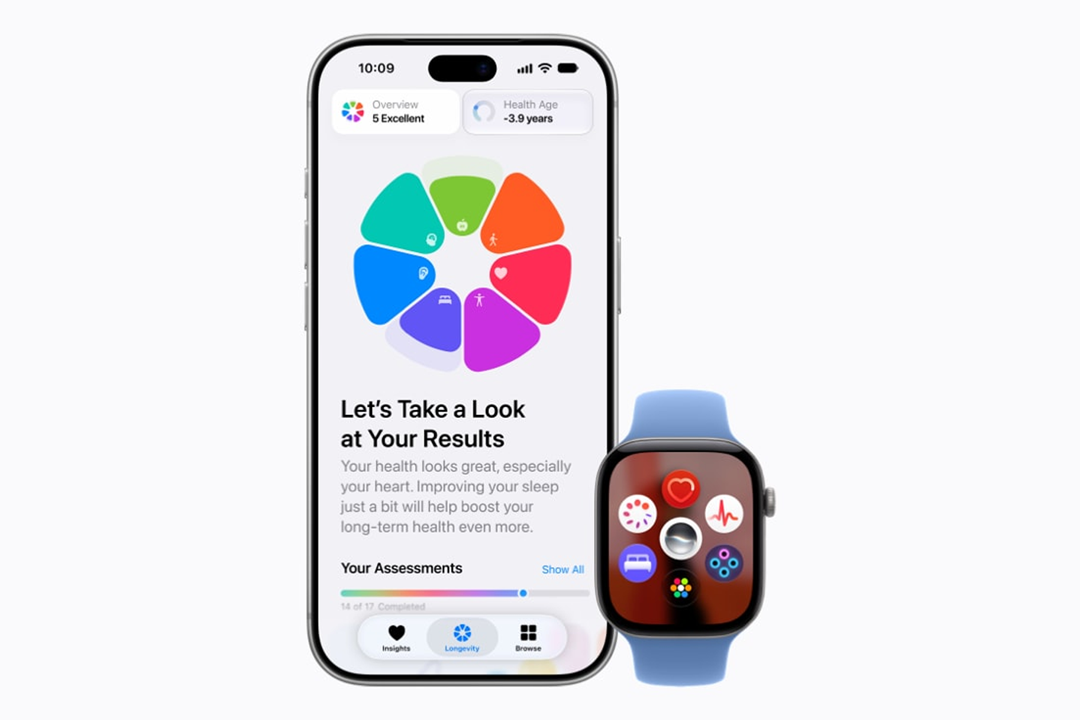
The improved Health app responds more dynamically to user information.
The Insights tab uses Apple Intelligence to surface timely summaries and deeper observations to make the growing collection of heart, sleep, activity, and fitness metrics easier to understand.
The Longevity tab examines health information across an extended period rather than concentrating on individual readings. Within it, Health Age compares selected metrics with the user’s actual age to indicate how aspects of their health are tracking over time.
The Health app introduces guided movement evaluations that assess areas such as strength, flexibility and balance. These use vision-based AI models on iPhone alongside heart rate information collected by the watch, with an on-screen trainer demonstrating the required movements.
The Health app can also offer additional support for laboratory tests covering more than 50 biomarkers, but at the time of release, this feature is limited to Quest Diagnostics locations in the US.Image courtesy of apple.com
Apple Intelligence and Siri AI
With watchOS 27, Apple Intelligence introduces Siri AI to the Apple Watch. Siri AI can draw on broad world knowledge and personal context, enabling users to have more natural conversations, request wellness information, or brainstorm a workout routine, all on their watch. Conversations can also continue across Apple devices signed into the same iCloud account, including supported images and pinned chats.
The Siri app and Siri Modular watch face make Apple Intelligence tools more accessible throughout the day. Also introduced with watchOS 27 is a dynamic app grid featuring five Siri-suggested apps, more contextual Smart Stack suggestions, and a new single-tap gesture to select an individual Smart Stack widget with one hand.
Image courtesy of apple.com
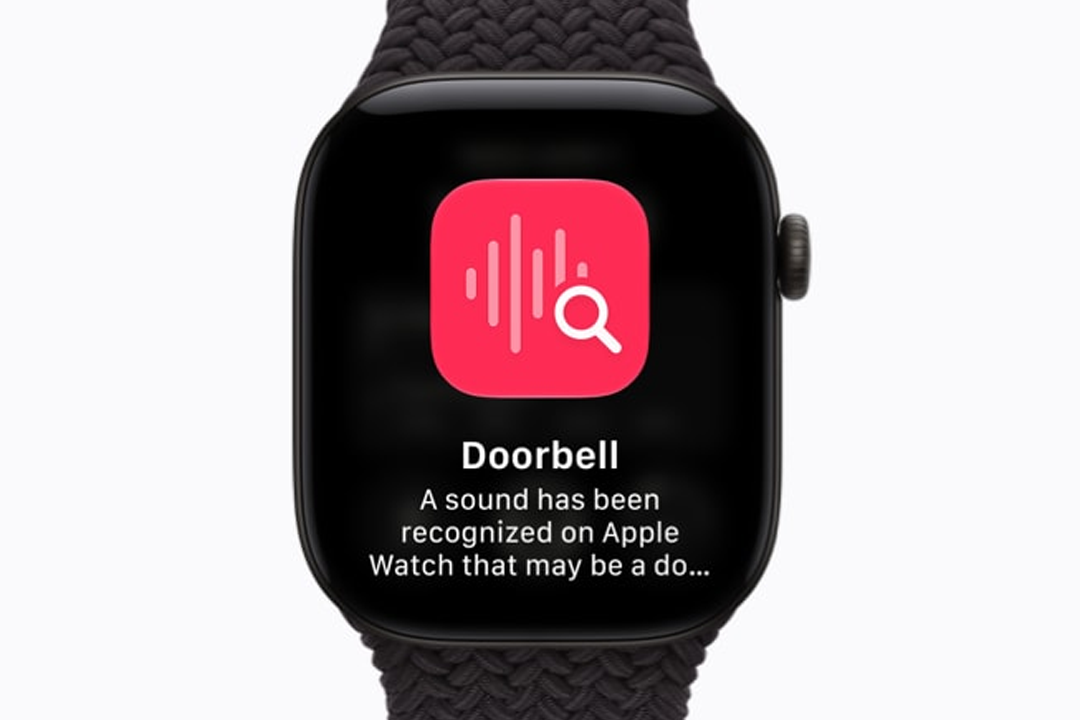
Audio Intelligence
Audio Intelligence features interpret sounds and conversations using the Apple Watch’s microphone, the S11 chip, Apple Intelligence models in iPhones, and Private Cloud Compute.
Sound Recognition listens for important noises such as sirens, alarms, or doorbells, then sends an alert to the watch when one is detected. The initial Sound Recognition set-up must be completed from a paired iPhone, but once this is complete, the feature works even if the paired iPhone is not nearby. Shazam can similarly recognise nearby music automatically and show the song and artist in the Smart Stack’s Music Recognition widget.
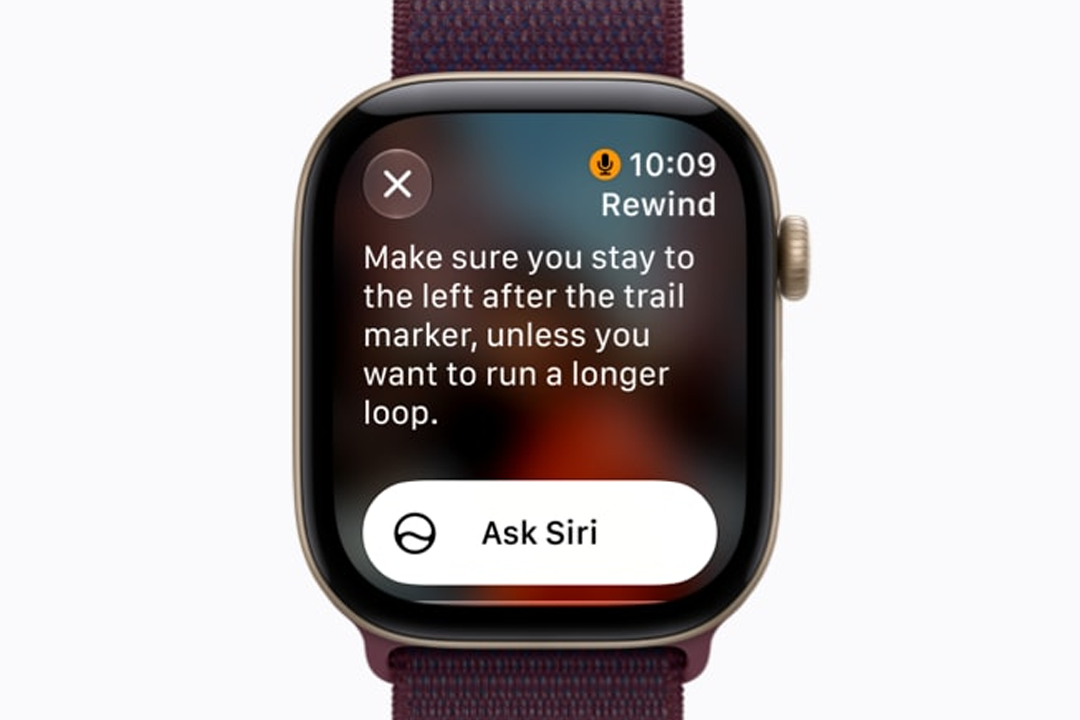
Live Rewind assists in those moments where part of a conversation is missed. Double-pressing the Digital Crown displays a transcription of the previous 15 seconds, which can then be saved or used as the basis for a Siri question. The watch plays an audible chime and shows a full-screen animation when the feature is activated, making its use clear to people nearby.
Siri Recap takes a broader approach by generating a title, summary and key points from conversations: creating concise notes rather than transcripts. Users can decide when Siri Recap is active, for example, limiting it to locations like their workplace—with the peace of mind that it's designed to exclude sensitive details such as financial information and government-issued identifiers.Image courtesy of apple.com
Final thoughts
The Apple Watch Series 12 and Apple Watch Ultra 4 demonstrate how Apple is evolving the role of the smartwatch. The Series 12 provides an adaptable experience for everyday health, fitness and connectivity, while the Ultra 4 provides the power and endurance needed for more demanding adventure.
The biggest development across both watches is their shift towards more proactive support. With more frequent health sensing, deeper insights, and increasingly contextual assistance, the Apple Watch is increasingly becoming an intelligent companion that can guide users on what to do next.