Introducing Handheld Gaming PCs: A New Era of Portable Gaming
PC gaming has traditionally centred on desktops and laptops, but increasingly, technological developments have opened up more portable ways to play. Handheld gaming PCs combine computer hardware with a built-in display and console-style controls, bringing compatible PC games into a convenient handheld format. Models vary across software, performance, controls, display technology and portability, so no single device will suit every player.
This guide explores a broad selection from across the market, highlighting the different priorities and playing styles each device supports.
Valve Steam Deck OLED
For a console-like Steam experience
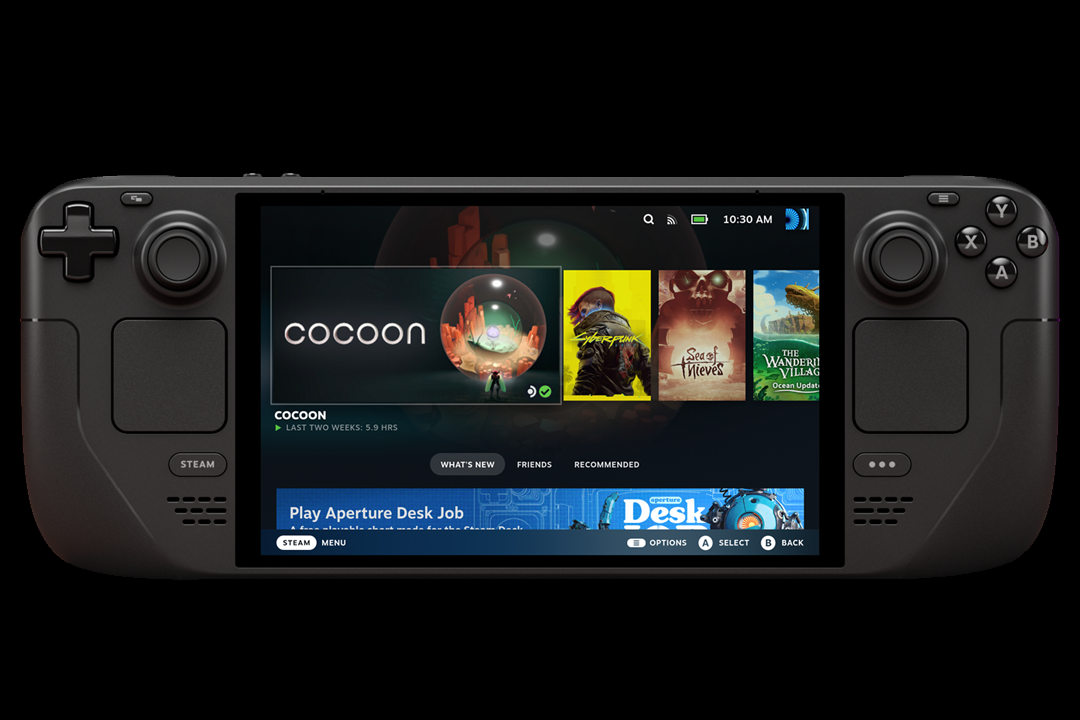
Originally released in 2022, the Steam Deck is considered by many to be a pioneering handheld gaming PC. Valve later introduced the Steam Deck OLED, updating the design with an organic light-emitting diode (OLED) display, improved battery life and Wi-Fi 6E. The Steam Deck OLED runs SteamOS, providing a gamepad-optimised interface designed for a console-like experience. Once signed in, your Steam Library appears on the device, along with compatibility ratings indicating what kind of experience you can expect from each game. You can also filter your library according to these ratings.
The Steam Deck OLED combines RDNA 2 graphics with a 7.4-inch high dynamic range (HDR) OLED touchscreen and a refresh rate of up to 90Hz. The OLED panel provides richer contrast, while the higher refresh rate supports smoother movement in games that can take advantage of it. Wi-Fi 6E can also provide faster downloads and more responsive online play when connected to a compatible network.
At approximately 640g, the Steam Deck OLED is among the lighter devices covered. Its 50Wh battery provides approximately three to twelve hours of gameplay, depending on the game, settings and usage conditions. It is available with either 512GB or 1TB of storage, with a microSD card slot providing additional space for compatible games.
Image courtesy of store.steampowered.com
MSI Claw 8 EX AI+
For premium play
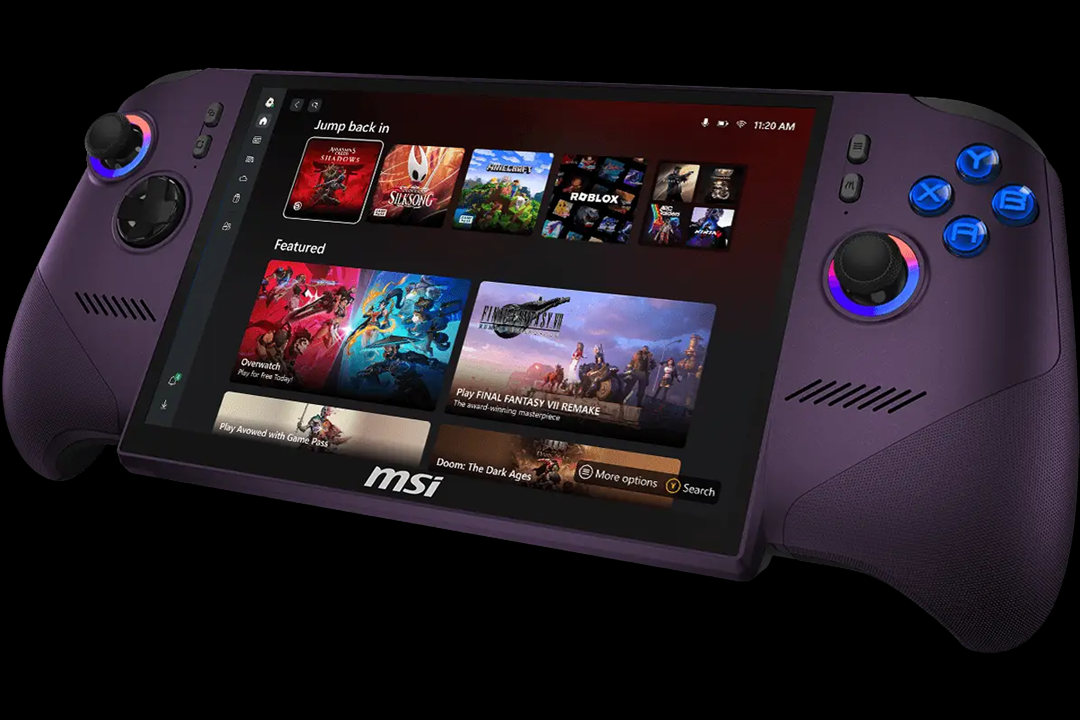
The MSI Claw 8 EX AI+ runs Windows 11 Home, providing access to a wide range of games, from AAA releases to indie favourites. Its Home Page serves as a centralised dashboard, bringing together essential system settings and instant access to your favourite games. There’s also a dedicated Game Library that combines your installed PC titles with direct access to Xbox Game Pass, where available.
The handheld’s quick settings provide additional control over performance and input options, even while a game is running. You can easily change settings while playing, switching between performance modes to conserve battery or unlock additional power. The adjustable joystick sensitivity and customisable Macro Keys let you tailor the controls to different games. Meanwhile, Xbox Mode can reduce RAM usage to direct more system resources towards gameplay.
The Claw is powered by an Intel Arc G3 Extreme processor with Intel Arc B390 graphics. Intel XeSS 3 supports AI-assisted upscaling and frame generation in compatible games, helping to improve frame rates without rendering every frame at the display’s native resolution. The handheld is available with up to 32GB of dual-channel memory for gaming and multitasking, alongside 1TB of storage for a sizeable game library.
Its 8-inch IPS-level touchscreen reaches up to 500 nits and combines a 120Hz refresh rate with variable refresh rate (VRR) support. VRR allows the screen to adapt to changing frame rates, helping to reduce visible screen tearing during gameplay. At 785g, the Claw is one of the heavier fixed-controller handhelds covered. Cooler Boost HyperFlow redirects airflow through the device to help manage internal temperatures, while its 80Wh battery supports longer portable sessions. Actual runtime will depend on the game, resolution, frame-rate limit and performance mode.
Image courtesy of msi.com
Lenovo Legion Go Gen 2
For flexible ways to play
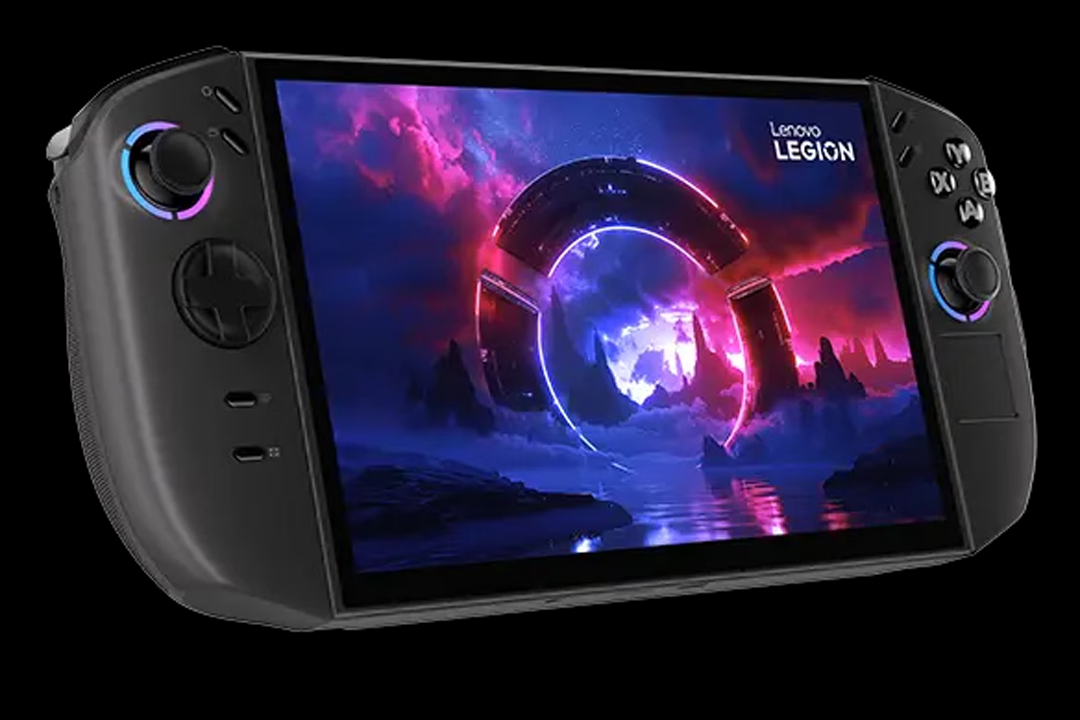
The Lenovo Legion Go Gen 2 is available in two different operating system models: Windows 11 Home or SteamOS. Both models are available with up to an AMD Ryzen Z2 Extreme processor and AMD Radeon 890M integrated graphics, although specifications vary by configuration. They also support Wi-Fi 6E for fast connectivity and Bluetooth 5.3 for connecting compatible controllers and headsets. The Windows 11 Home model gives you the freedom of a PC in your hands while still offering access to Steam and other game launchers. The SteamOS model incorporates the Steam UI for a more traditionally console-based experience but offers less flexibility for accessing applications or launchers not affiliated with Steam.
The detachable Legion TrueStrike controllers enable several ways to play. Handheld Mode offers a traditional portable setup, while Console Mode turns the detached controllers into a standalone gamepad for playing on the built-in screen or a compatible TV. For first-person games, FPS Mode lets you place the right controller in its base and operate it like a mouse. On the Windows model, Legion Space also lets you adjust joystick sensitivity, power modes and thermal settings while playing.
The complete device weighs approximately 920g, including both controllers, which account for approximately 210g collectively. Although this makes it one of the heavier handhelds covered, the controllers can be detached for alternative playing setups. Its 8.8-inch Lenovo PureSight OLED display provides an expansive 16:10 viewing area, while a 144Hz variable refresh rate helps maintain smoother movement as frame rates change.
The handheld includes a 74Wh battery, with battery-management options available through Legion Space on Windows configurations. Legion ColdFront cooling also helps manage internal temperatures during demanding gaming sessions.
Image courtesy of lenovo.com
ASUS ROG Xbox Ally X20
For portable Xbox-style play
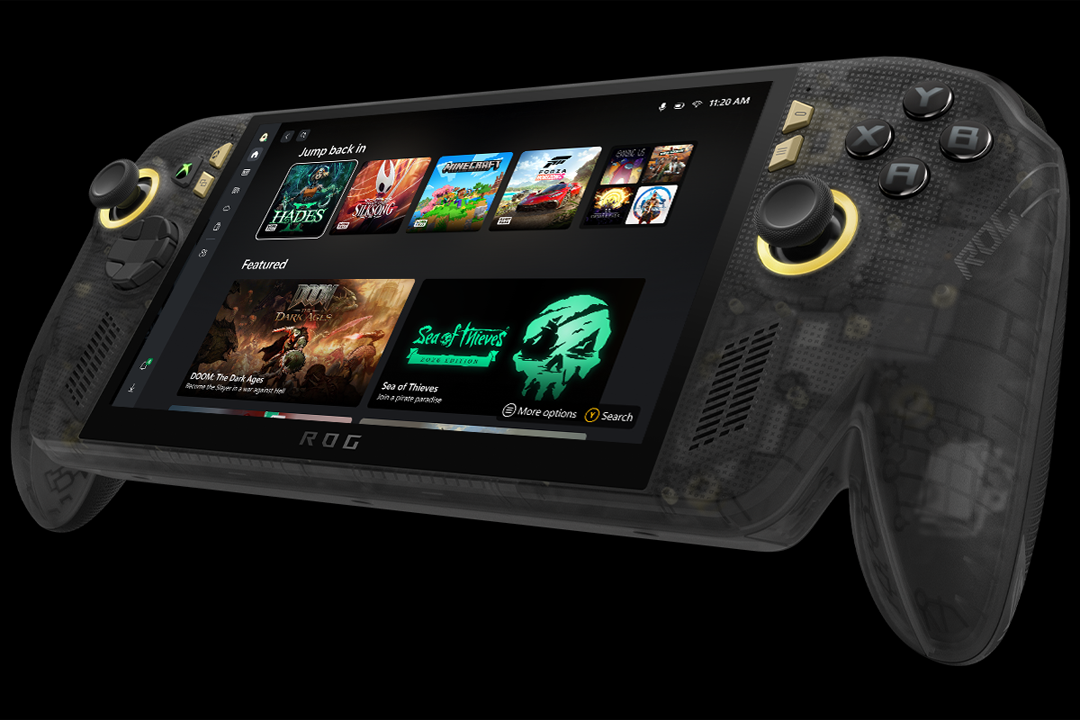
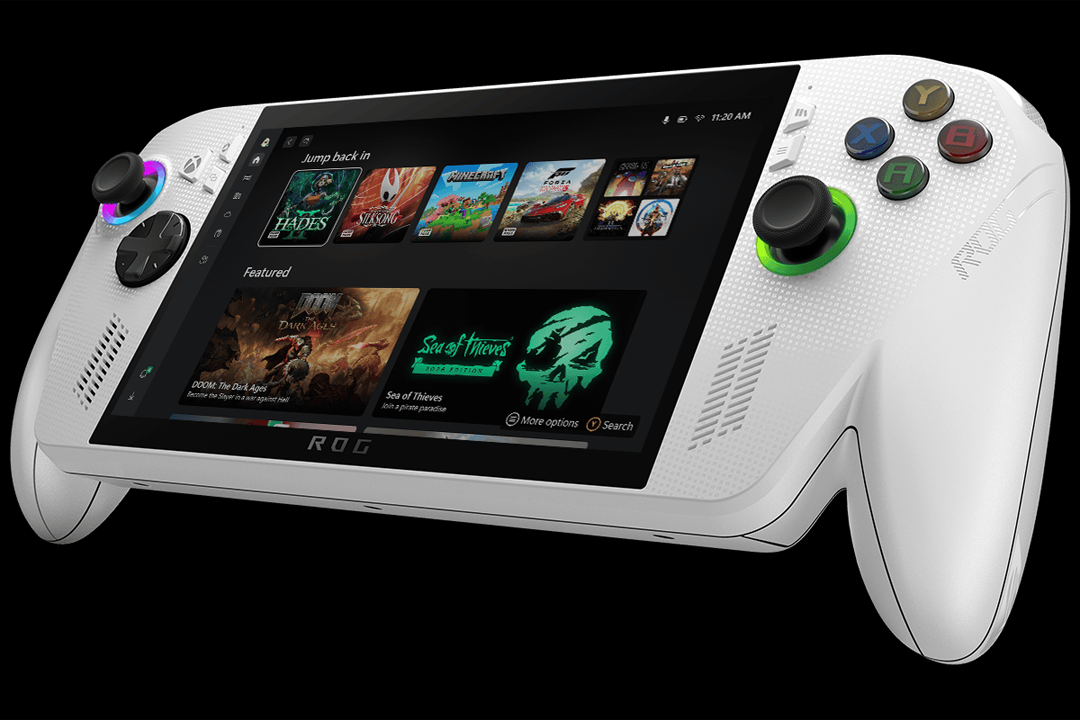
The ROG Xbox Ally X20 brings an Xbox-style experience to a Windows handheld. Its streamlined library brings together your Xbox games alongside major PC storefronts, with all games ready to be powered by the AMD Ryzen AI Z2 Extreme processor and 24GB of dual-channel memory. The dedicated Xbox Mode provides a controller-optimised layout that will feel familiar for fans of the console, while the Xbox button opens the Xbox Game Bar for effortless navigation.
This handheld can also be docked for larger-screen play, with specialised controls for different types of games. The TMR joysticks detect small movements for precise control, while impulse triggers provide haptic feedback in supported titles. Its transforming D-pad can also be lifted and rotated, letting you switch between focused four-way inputs and broader eight-way controls.
At 756g, the Ally X20 balances its higher-end hardware with a portable design. Its 7.4-inch Nebula HDR OLED touchscreen supports FreeSync Premium Pro and a refresh rate of up to 120Hz, helping to reduce visible screen tearing and keep movement smooth as frame rates change. The display reaches up to 600 nits in standard dynamic range and 1,400 nits with supported HDR content, enabling brighter highlights and greater contrast when HDR is available.
An 80Wh battery supports portable play, although runtime will vary by game and settings. The Intelligent Cooling system helps manage internal temperatures during demanding sessions.
Image courtesy of xbox.com
ASUS ROG Xbox Ally
For a handheld PC entry point
The ROG Xbox Ally brings a broad Xbox-style experience to a relatively affordable Windows handheld. Like the Ally X20, it offers a controller-optimised Xbox full-screen experience, while the dedicated Xbox button provides quick access to the Xbox Game Bar. It uses an AMD Ryzen Z2 A processor with integrated Radeon graphics, supported by 16GB of dual-channel LPDDR5 memory. This is a more modest configuration than the X20, positioning the standard model as the more accessible entry point to the range.
The contoured, textured grips provide a familiar Xbox controller-style design for portable play. Its control layout is more conventional than that X20’S, with full-size analogue sticks, Hall Effect triggers, a D-pad, HD haptics and two assignable rear buttons. The X20 adds TMR joysticks, impulse triggers and a transforming D-pad. This standard Ally is better suited to those who value a simpler control layout over those additional inputs.
At 670g, the Xbox Ally is one of the lighter handhelds covered. Its 7-inch Full HD IPS-level touchscreen combines a refresh rate of up to 120Hz with FreeSync Premium, helping to produce smoother movement and reduce visible screen tearing. The 512GB SSD provides less built-in storage than the X20’s 1TB SSD, but a microSD card slot offers an option for expansion. Its 60Wh battery supports portable play, with actual runtime varying according to the game, performance mode, brightness and connectivity settings.
Image courtesy of xbox.com
Final thoughts
The growing range of handheld gaming PCs shows that portable play no longer follows a single formula. Differences in operating systems, controls, displays and weight can substantially shape the experience, making existing game libraries, budget and intended playing environment important considerations. Whether used on a commute, around the home or connected to a larger display, these devices can make PC gaming more adaptable and place fewer limits on where a gaming session can begin.