Understanding Your ABS Gaming PC
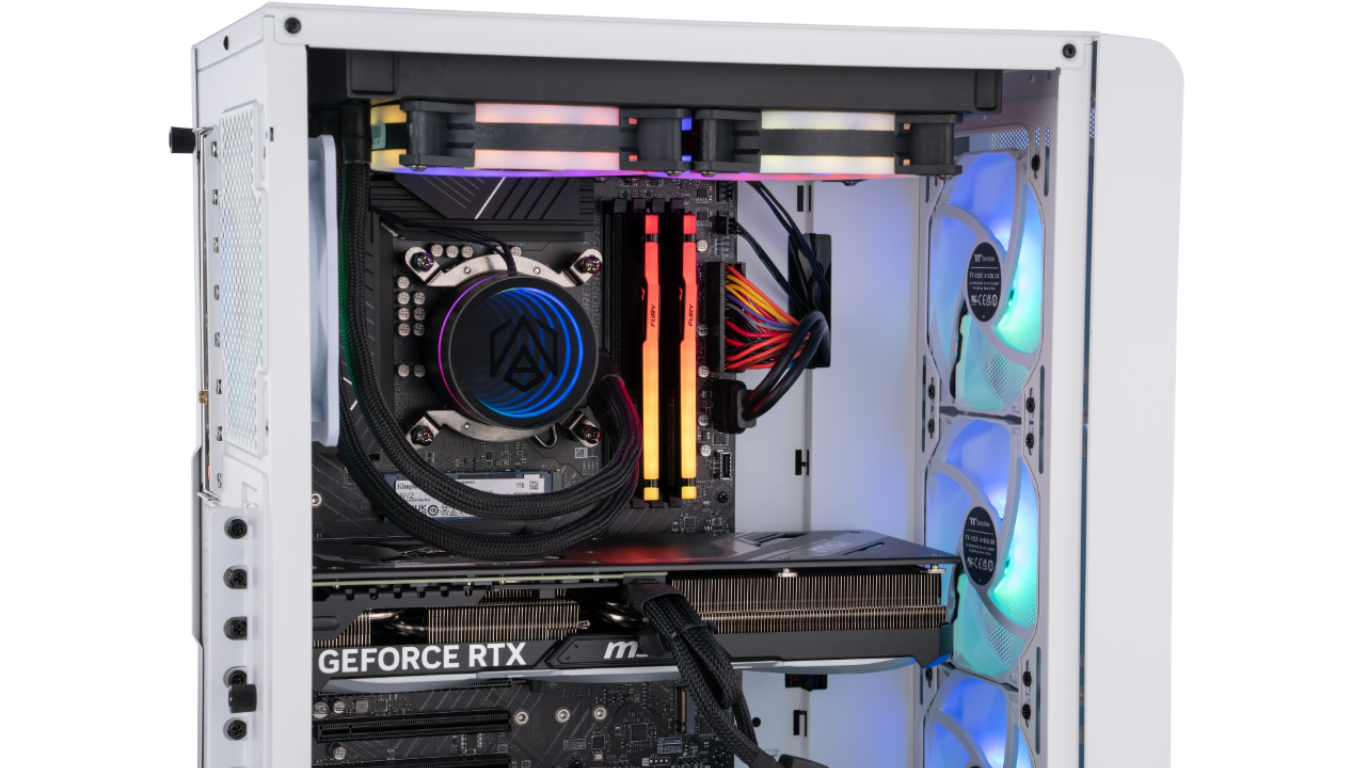
ABS (Advanced Battlestations) prebuilt PCs are designed to remove that friction while still delivering systems that meet the expectations of gamers around the world. This article explores how ABS PCs are built, the eight core components inside them, how those components interact, and what customers should evaluate when choosing a prebuilt gaming PC.
Prebuilt vs DIY: a personal choice, but not a compromise
The hidden cost of DIY builds
From a technical standpoint, DIY PC building introduces variability at every step. Even when parts are well‑researched on paper, real-world issues can arise. Memory incompatibility, thermal bottlenecks, firmware conflicts—the list goes on. Diagnosing those issues requires time, spare components, and experience.
Long-term maintenance compounds the problem. When a system fails years later, the builder becomes their own support team, often navigating multiple manufacturers’ RMAs (Return Merchandise Authorisation) and replacement timelines.
Why prebuilt systems appeal to power users
ABS PCs are assembled by certified builders and thoroughly stress‑tested before shipment. This means:
- Components are validated as a working system, not just individually
- BIOS (Basic Input/Output System), firmware, and OS (Operating System) configurations are optimised
- Cooling and power delivery are tuned for sustained operation
For users who value reliability and scalability more than the assembly process itself, this approach offers a clean path to high-performance computing.
Partner ecosystem
ABS works with industry-leading manufacturers, including ASUS, AMD, Corsair, GIGABYTE, Intel, NVIDIA, and Microsoft.
These partnerships matter because component quality directly affects the performance of your PC, from electrical stability and thermal performance to firmware support longevity and driver maturity.
By standardising on reputable brands, ABS minimises the risk of bottlenecks, instability, and short product support cycles—all critical concerns for enthusiasts planning long-term ownership.

Eight core components
1. CPU
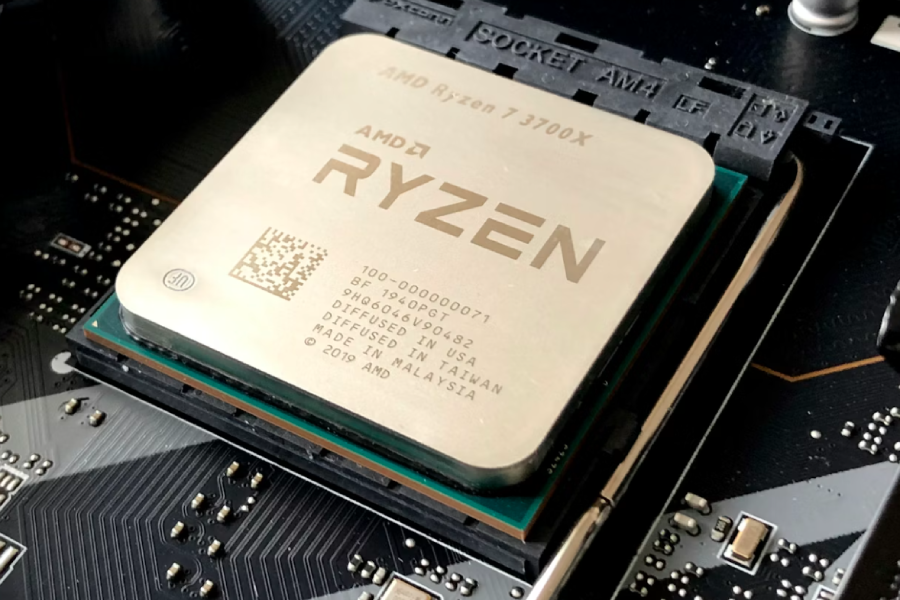
The CPU (Central Processing Unit) acts as the system scheduler, managing game logic, physics calculations, AI (Artificial Intelligence) behaviour, operating system tasks, and background applications. Clock speed governs single-thread responsiveness, while core and thread count determine how well workloads scale.
- Intel CPUs frequently lead in lightly threaded gaming scenarios
- Ryzen CPUs excel in efficiency and parallel workloads such as streaming, content creation, or modded gaming environments
In ABS systems, CPUs are selected to avoid GPU (Graphics Processing Unit) starvation—ensuring that the graphics card can operate at full utilisation.
2. GPU
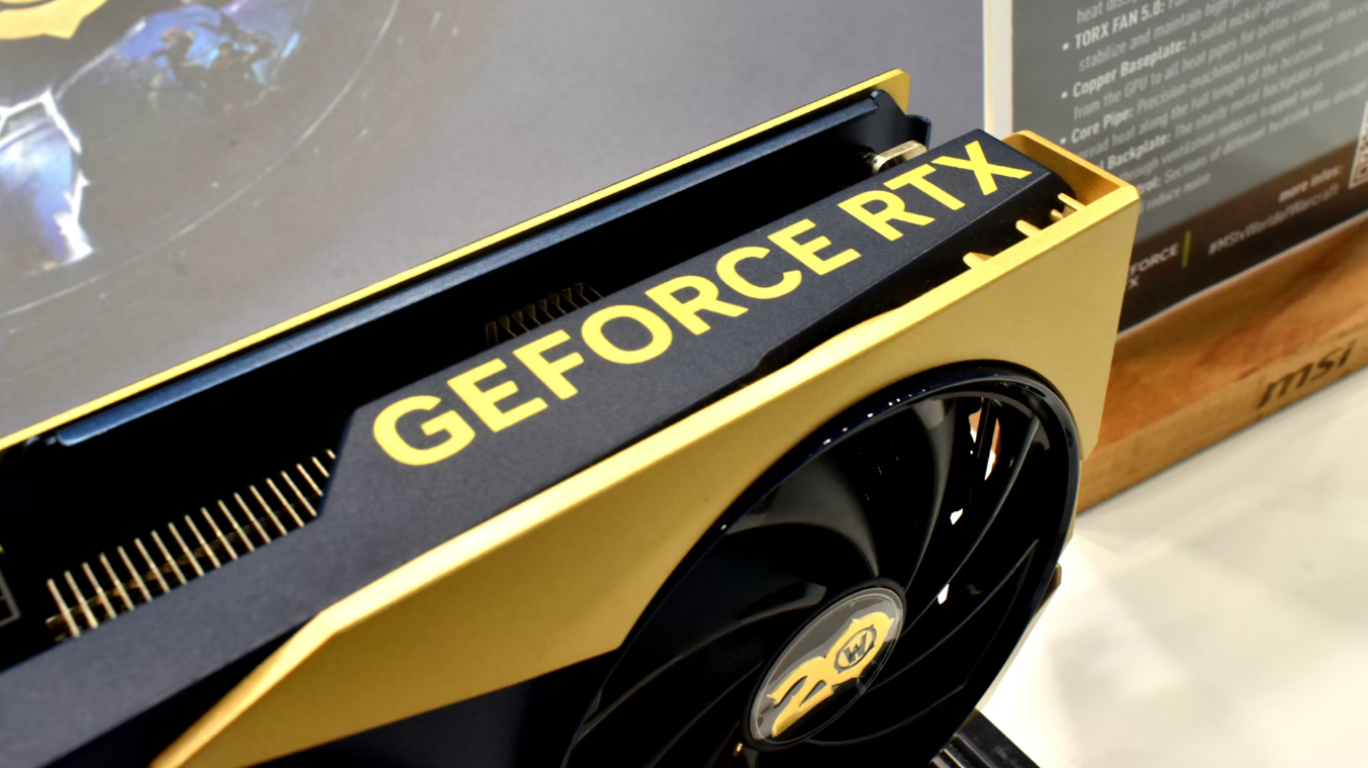
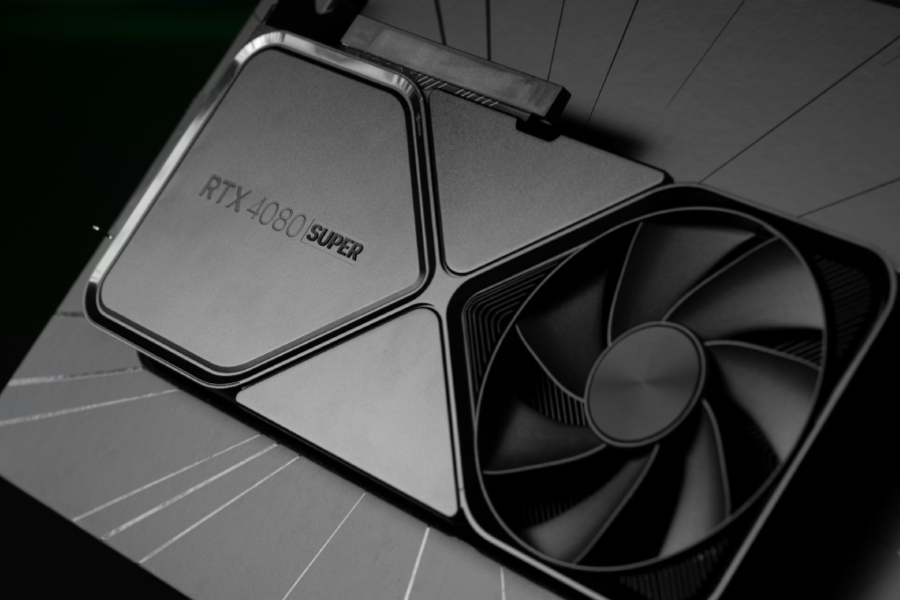
The GPU (Graphics Processing Unit) is responsible for rendering scenes, applying shaders, handling textures, and accelerating ray tracing. NVIDIA GeForce RTX GPUs also deliver:
- Dedicated RT (ray tracing) cores for real-time ray tracing
- Tensor cores for DLSS (Deep Learning Super Sampling) upscaling
- High-quality hardware video encoders
In practical terms, the GPU defines resolution targets, frame consistency, and visual fidelity far more than any other component.
3. RAM
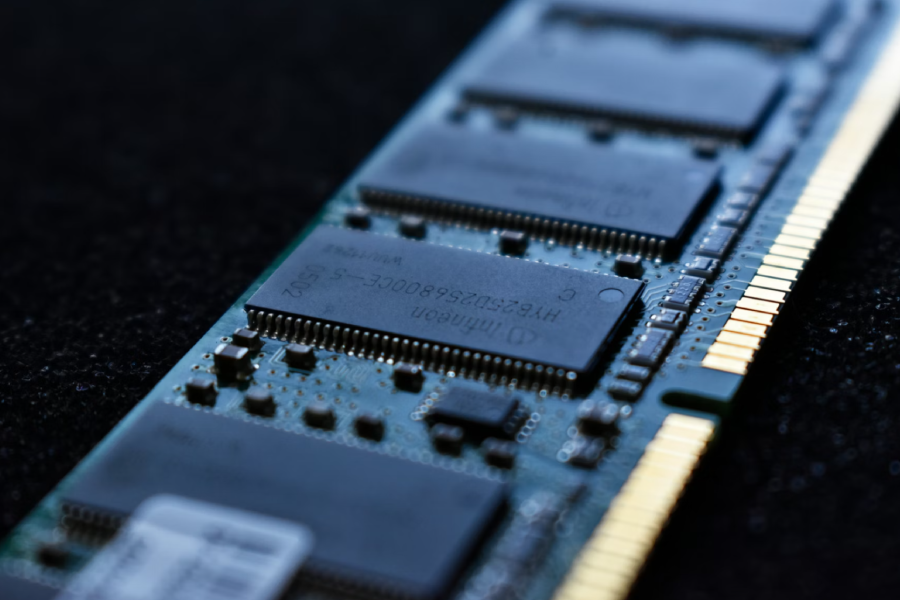
System memory affects how quickly data can move between storage, CPU, and GPU. Dual-channel RAM (Random Access Memory) configurations are standard in ABS systems because they:
- Increase memory bandwidth
- Reduce stutter caused by asset streaming
- Improve minimum frame rates
For modern gaming, 16 GB is a functional baseline, while 32 GB offers comfort for streaming, modded games, and future titles.
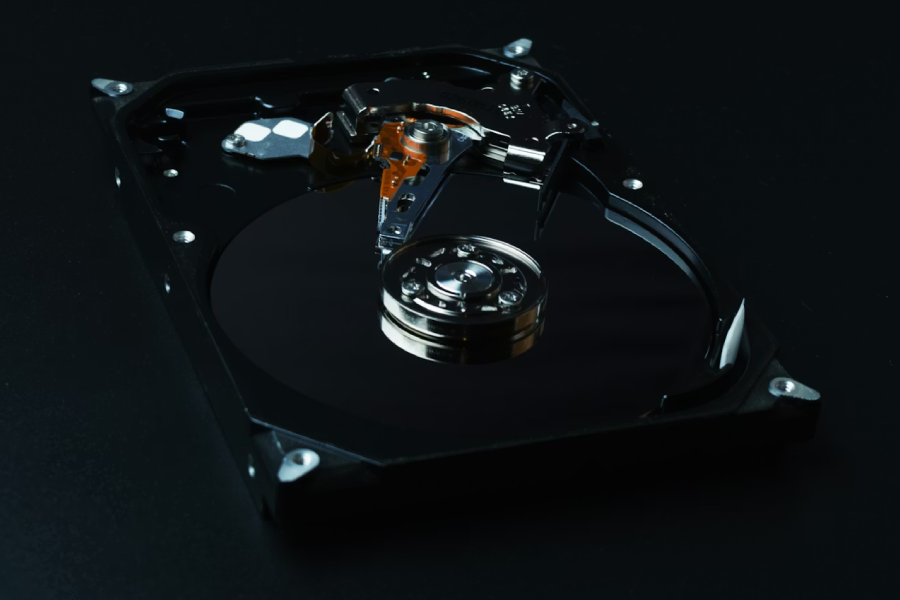
Storage performance directly impacts load times and system responsiveness. ABS systems use NVMe solid-state drives, which operate over PCIe (Peripheral Component Interconnect Express) lanes rather than legacy SATA (Serial Advanced Technology Attachment) interfaces.
The result is:
- Near‑instant OS boot times
- Faster texture streaming
- Reduced hitching in open-world games
Additional storage can easily be added later without disrupting the system architecture.
5. Motherboard
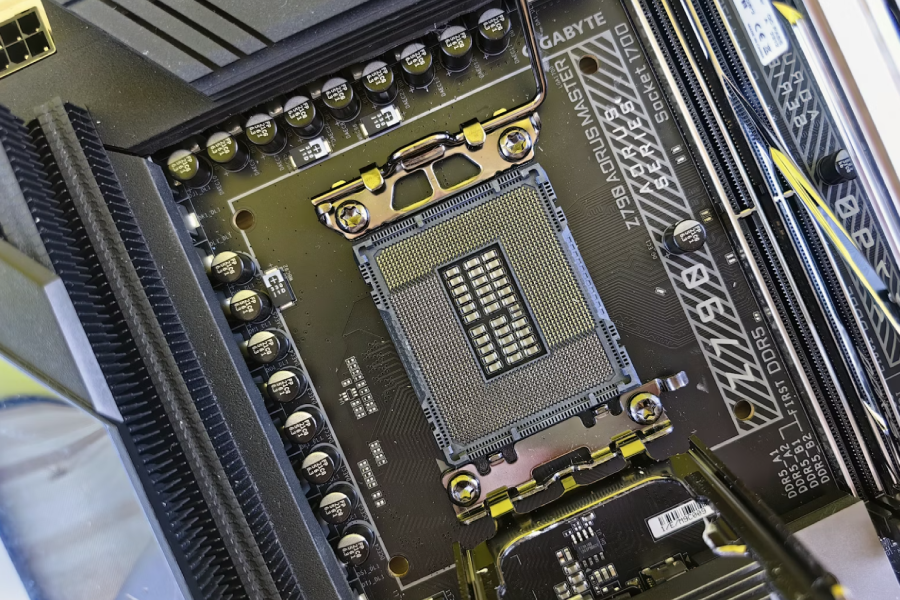
The motherboard governs system expandability, memory compatibility, I/O (Input/Output) bandwidth, and connectivity. ABS avoids overspecifying motherboards but ensures:
- Stable power delivery to the CPU
- Reliable PCIe slot reinforcement
- Modern connectivity options such as Wi‑Fi and USB-C
This creates a balance between current performance and future upgrade headroom.
6. Power supply
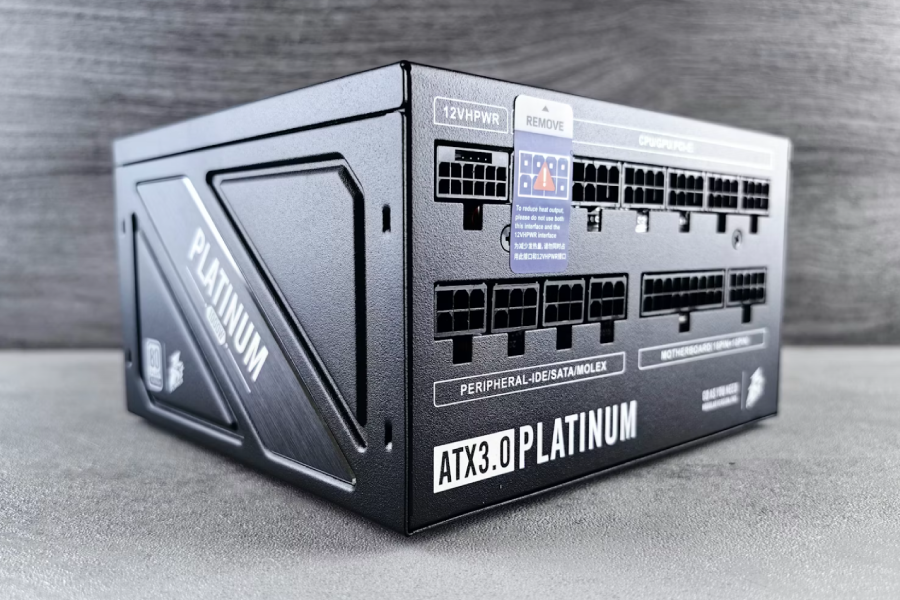
The PSU (Power Supply Unit) converts and regulates power for all system components. Poor power delivery causes instability and degrades component lifespan.
ABS systems use certified, reliable PSUs with sufficient wattage overhead to accommodate GPU upgrades without replacement. International customers may need to manually switch the PSU from 115 V to 230 V, depending on regional standards.
7. Cooling
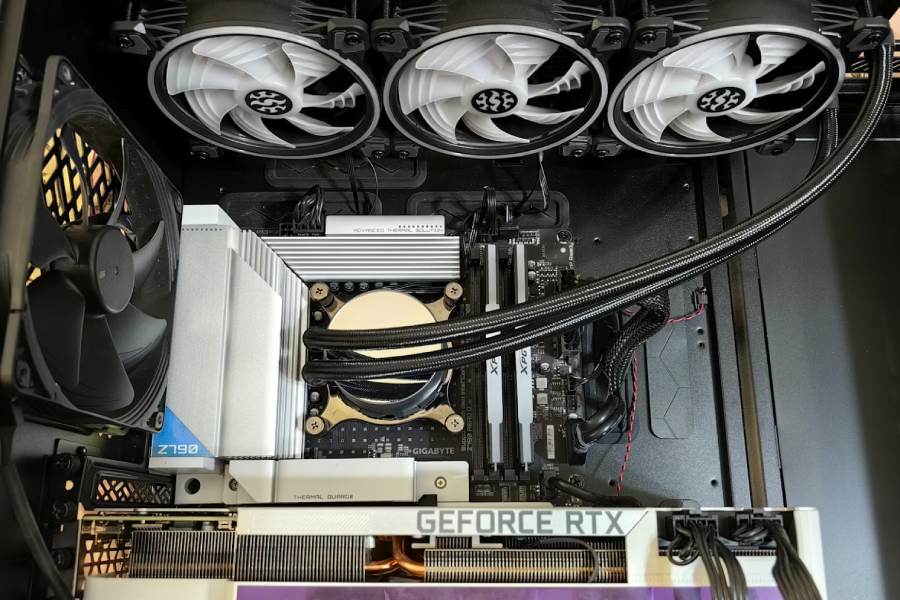
Thermal management directly impacts clock speeds and component longevity. ABS systems are engineered for:
- Correct fan orientation and airflow paths
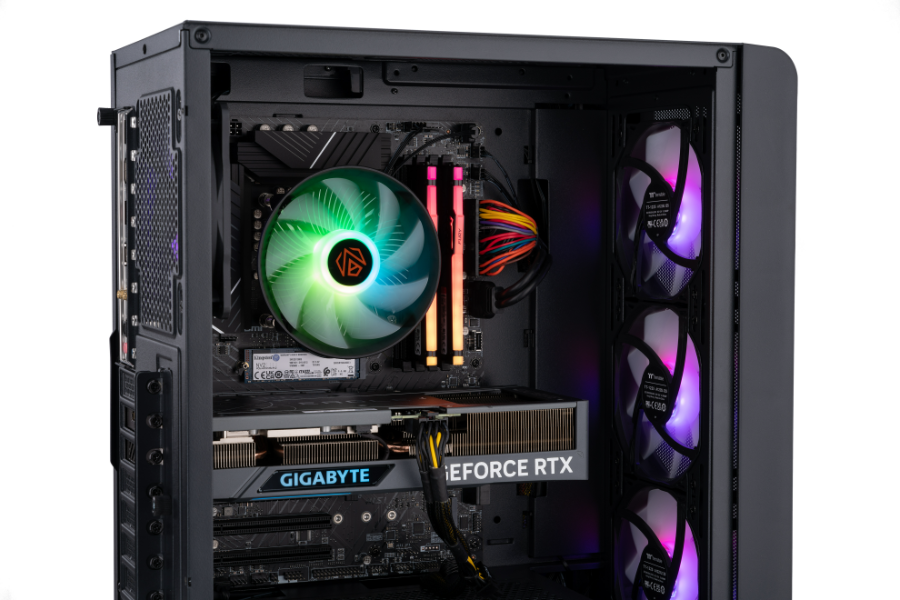
- Quality CPU coolers matched to thermal load
- Case designs that prevent heat recirculation
This prevents thermal throttling during extended gaming sessions.
8. Case and assembly
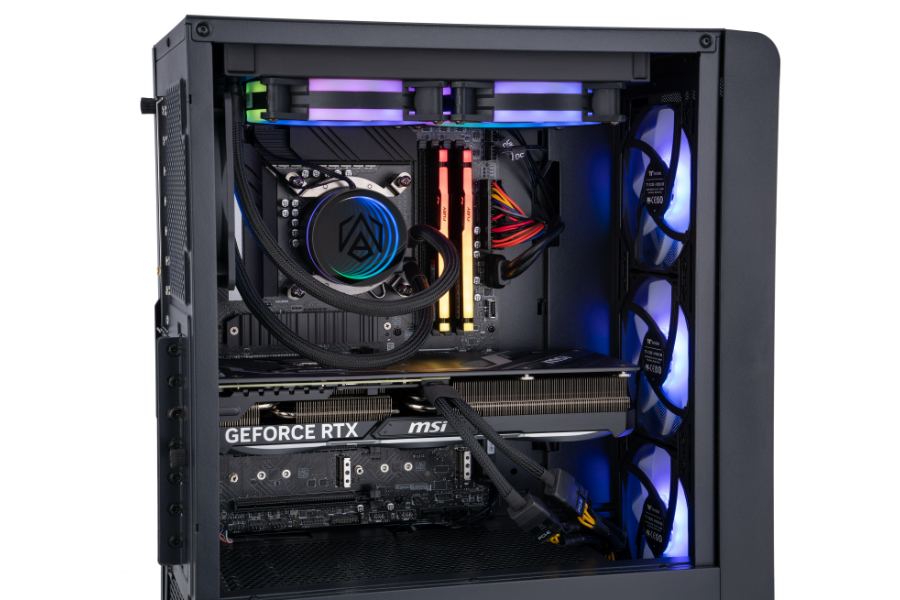
Beyond aesthetics, the case influences airflow, noise levels, and ease of upgrades. ABS systems undergo:
- Cable management validation
- Stress testing with benchmarking tools
- Final quality assurance inspections
This ensures consistency from unit to unit.
Budget strategy
Short-term needs vs long‑term value
For constrained budgets, ABS systems allow incremental upgrades—starting with a solid foundation and adding GPU or memory capacity later. However, for users with well-defined performance targets, waiting and investing in a higher-tier system often yields better value over time due to:
- Reduced upgrade frequency
- Higher resale potential
- Longer performance relevance
Setup experience
Straightforward and reliable
ABS PCs are designed to work immediately upon setup, requiring only basic steps such as removing internal packaging, connecting peripherals, and powering on the system. The result is a transition from delivery to gameplay in minutes—not days or even weeks for a DIY build after all the components finally arrive.
Final perspective
An ABS gaming PC represents a systems‑engineering approach to performance. Rather than focusing on isolated specs, each machine is designed as an integrated platform optimised for stability, thermals, scalability, and long-term usability.
For gamers who value performance, peace of mind, time and energy, ABS offers a technically sound path into high-end PC gaming—without sacrificing transparency, component quality, or upgrade flexibility.