The NVIDIA GeForce RTX Series: A Deep Dive Into the Future of Graphics Performance
NVIDIA GeForce RTX
The NVIDIA GeForce RTX Series continues to be the backbone of high-performance PC graphics, but with the leaps made from the RTX 30 and 40 generations to the RTX 50 Series, the ecosystem has rapidly shifted toward AI-driven rendering, efficient real-time ray tracing, and full-stack GPU (Graphics Processing Unit) acceleration.
For gaming and content creation, these technologies aren’t just incremental upgrades—they're reshaping how modern applications generate and process visual data.
But it’s not just gaming that is enhanced by NVIDIA GPUs. A variety of manufacturers utilise the GeForce RTX Series across their companies, from compatibility for TVs and monitors, to laptops and cloud services, and even behind the scenes in their business operations.
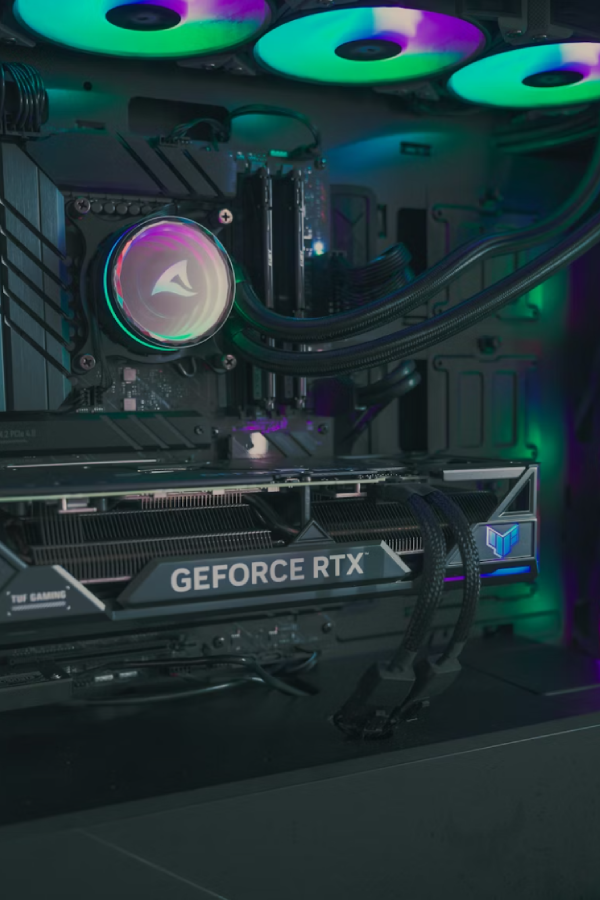
The evolution of RTX
When NVIDIA introduced the first RTX GPUs, the industry witnessed the transition from traditional rasterisation (the conversion of 3D data into 2D, pixelated raster images) toward hardware-accelerated ray tracing and Tensor‑core-powered AI rendering. With the RTX 50 Series built on the Blackwell architecture, these workflows have matured significantly, enabling greater computational density and better efficiency.
- Ray tracing cores (RT cores) have evolved to a point where complex lighting calculations (global illumination, caustics, and real-time reflections) can run with minimal performance impact
- Tensor cores, which accelerate AI-based interpolation and creator applications, have become critical for far more than just DLSS (Deep Learning Super Sampling)
Together, these advancements enable a hybrid rendering model, where ray tracing and AI inference work simultaneously to maintain high framerates and image fidelity. This means every generation of RTX moves further away from brute-force rendering and closer to predictive, AI-enhanced graphics pipelines that are both faster and more efficient.
The era of AI frame generation
DLSS has arguably been the single largest driver of NVIDIA’s dominance in PC graphics, and DLSS 4.5, announced at CES 2026, represents a shift toward full AI-rendered frames rather than AI-upscaled raster images (images made of pixels where resolution quality is determined by the number of pixels). NVIDIA confirms that DLSS 4.5 brings a new transformer-based super-resolution model and Dynamic Multi Frame Generation, producing up to six AI-generated frames per rendered frame.
- Transformer architecture
DLSS 4.5 uses a second-generation transformer model similar to those used in modern language and vision models, allowing more accurate reconstruction of motion, lighting, and object edges. - Multi Frame Generation
Earlier frame generation techniques relied heavily on motion vectors and heuristics. DLSS 4.5 analyses multiple past frames, scene geometry, and lighting data to synthesise entirely new frames that retain detail during fast motion. - Widespread adoption
With over 250 DLSS Multi Frame Generation supported games/apps, and over 400 titles supporting DLSS super-resolution, the ecosystem is now large enough that DLSS is no longer an optional extra—it's a standard feature for modern gaming workloads.
In real-world terms, gamers can expect buttery-smooth 120–180 FPS experiences even in fully ray-traced scenes, while creators benefit from AI-synthesised preview frames in video editing and motion graphics tools.
Transformative gaming performance
Real-time ray tracing
With fourth-gen RT cores, path-traced scenes that previously required large performance trade-offs now run smoothly, especially when paired with DLSS 4.5. Games like PRAGMATA and Resident Evil Requiem are launching with full path tracing support thanks to these hardware capabilities.
AI-driven rendering
DLSS 4.5’s transformer-based system generates additional frames that blend naturally with rendered content, resulting in smoother motion at high refresh rates. DLSS 4.5 benefits:
- Fast-paced shooters
- Racing simulators
- VR experiences
API and engine support
RTX 50 GPUs support DirectX 12 Ultimate, Vulkan 1.4, and OpenGL 4.6, ensuring longevity with future game engines and rendering techniques.
Altogether, the RTX ecosystem doesn’t just improve raw FPS—it enhances visual quality, stability, and the responsiveness needed for competitive gaming.
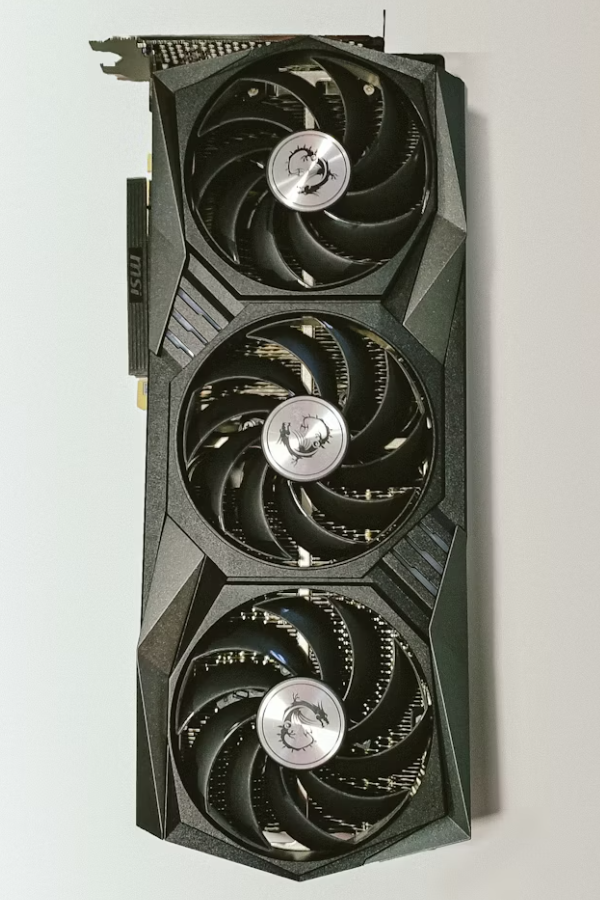
RTX for creators
While RTX is synonymous with gaming, content creators arguably benefit even more from RTX technologies.
VRAM and memory bandwidth
Even older flagship GPUs like the RTX 3090 remain relevant because their 24GB of GDDR6X (Graphics Double Data Rate 6X) memory handles 8K editing, simulation work, and large-scale rendering with ease. This card still performs competitively in 2026 thanks to driver optimisations.
AI-accelerated workflows
Tasks like video denoising, colour grading, 3D texture generation, and animation upscaling are increasingly handled by Tensor cores, drastically speeding up production pipelines across tools and creation software.
DLSS in creator applications
DLSS is starting to show up in creator tools, providing interactive previews in scenes previously too heavy to visualise in real time. NVIDIA continues to integrate AI-based enhancements into broadcast, rendering, and even virtual production pipelines.
For designers, editors, and animators working with high-resolution assets, RTX GPUs are an essential part of a modern workflow.
Final thoughts
Today's RTX GPUs are no longer just graphics processors—they're sophisticated neural and rendering engines that combine ray tracing, AI, and raw compute power into a single architecture.
Whether you're building a high-end gaming rig, producing 8K video content, or developing visually complex 3D environments, the RTX series represents the pinnacle of modern GPU design.